
Former Fed Chair Alan Greenspan Dies at 100 After Shaping US Monetary Policy for 18 Years
Key Takeaways
Alan Greenspan, one of the longest-serving Federal Reserve chairmen in U.S. history, has died at age 100.The Fed credited Greenspan with helping shape monetary policy, price stability, and institutional credibility during his 18-year tenure.Greenspan remained skeptical of bitcoin throughout its rise, contrasting with current Fed Chair Kevin Warsh’s view that digital assets can offer useful market signals.
Central Bank Highlights Greenspan’s Long Influence on Monetary Policy
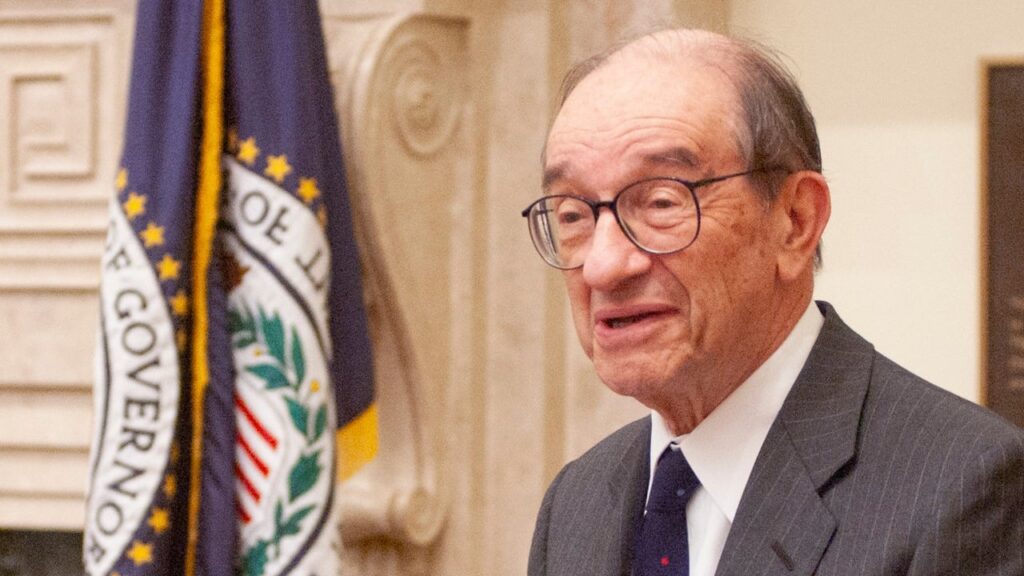
The Federal Reserve announced Monday that Alan Greenspan, its 13th chairman and one of the most influential central bankers of the modern era, has died at age 100. Greenspan led the Board of Governors from 1987 to 2006, making him one of the longest-serving Fed chairs in U.S. history.
His tenure covered major events including the 1987 stock market crash, the 1990s expansion, the Asian financial crisis, and the dot-com bust. The Fed said his influence helped shape the institution’s approach to monetary policy long after his departure. Greenspan also remained an active commentator on financial markets, including bitcoin.
Federal Reserve stated:
“Chairman Greenspan served as the 13th Chairman of the Board of Governors from 1987 to 2006, and his contributions to monetary policy and economic thought left a lasting mark on this institution, on the broader field of economics, and on the country.”
Across four presidential administrations, Greenspan oversaw a period of relatively stable inflation and economic growth. The Fed credited his emphasis on rigorous analysis and disciplined policymaking with helping strengthen public confidence in the central bank.
Greenspan’s Bitcoin Skepticism Contrasted With Warsh’s Approach
Greenspan was notably skeptical of bitcoin and other digital assets. Following the collapse of FTX in 2023, he remarked: “The collapse of FTX was not a result of lax risk management, inadequate accounting procedures, or some feature inherent to crypto—it was purely fraud.” He further observed: “With respect to the wider crypto universe, I view the asset class as too dependent on the ‘greater fool theory’ to be a desirable investment.”
He had expressed similar doubts years earlier, questioning bitcoin’s intrinsic value in public remarks during its early rise and describing it as a speculative asset whose long-term worth was difficult to determine. In 2017, he also compared bitcoin to the Continental currency issued during the American Revolution, noting that the currency ultimately became worthless and suggesting that bitcoin faced similar questions about intrinsic value.
Federal Reserve added on June 22:
“Chairman Greenspan’s legacy endures at the Federal Reserve—in those he mentored directly, in the economists and public servants he inspired, and in the frameworks and practices he helped shape.”
More than two decades after Greenspan left office, the Federal Reserve is now led by a different generation of policymakers. Kevin Warsh assumed the chairmanship on May 22. Warsh has described bitcoin as an important asset for policymakers to understand, arguing that digital assets can provide useful signals about confidence in fiat currencies and the broader financial system. His term as Fed chair runs through May 21, 2030, while his appointment as a member of the Board of Governors extends through Jan. 31, 2040.