
Novogratz Pushes Galaxy Past Bitcoin Mining Into $1B AI Power Business
Key Takeaways
Galaxy delivered 133 MW to Coreweave at Helios on July 6, 2026, formalizing a $1B revenue path.Coreweave has committed to 526 MW across Helios Phases I-III under a 15-year lease.Galaxy targets 3.6 GW of capacity at Helios, with Phase II data halls arriving in 2027.
The site sits in Dickens County, about 60 miles from Lubbock. It started as a bitcoin mining facility built by Argo Blockchain in 2021. Galaxy bought it in late 2022 for roughly $65 million after Argo ran into financial trouble during the crypto winter.
Bitcoin mining margins tightened after the April 2024 halving. Power costs rose, difficulty climbed, and artificial intelligence (AI) companies started paying more for the same electricity miners had relied on. Galaxy read the shift and moved.
Coreweave signed on as anchor tenant in March 2025 under a 15-year lease. The company exercised two more options over the following months, bringing its total commitment to 526 megawatts of critical IT load across three phases. That covers the full 800 megawatts of gross power currently approved at the site.
What Galaxy Delivered
Crews stripped out immersion cooling tanks and ASIC racks built for mining. In their place, they installed Tier III N+1 redundant power systems, high-density electrical infrastructure for GPU clusters, and more than 100 miles of fiber laterals connecting to long-haul routes.
Rent on Phase I started in the second quarter of 2026. Galaxy says the full 526 megawatt buildout, once operational, will generate more than $1 billion in average annual revenue. Phase I alone is projected to bring in about $4.5 billion in lease payments over 15 years, or roughly $300 million a year.
Galaxy funded the work with a $1.4 billion project-level debt facility, about $350 million in equity, and a separate $460 million raise from an outside asset manager in late 2025.
Novogratz on the Milestone
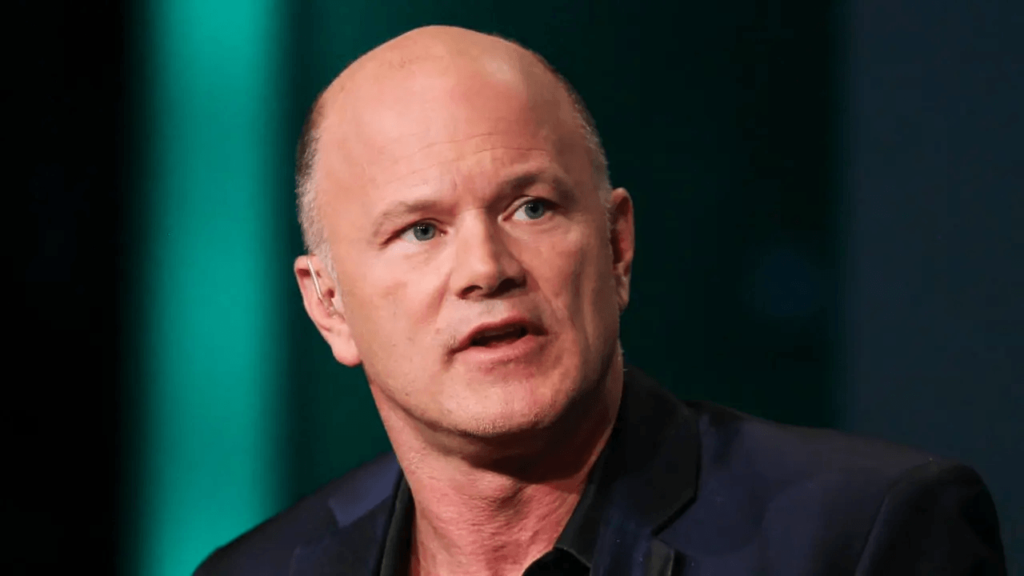
Mike Novogratz, founder and CEO of Galaxy, remarked that the company proved it can execute hyperscale AI construction on budget and on schedule. He said the shift toward high-density, AI-ready power is structural, not cyclical.
He wrote:
“Helios is now generating revenue across its entire 133 MW of IT load, and greenfield work on Phase II is already underway. The demand for high-density, AI-ready power is not a cycle; it is a structural shift, and Galaxy is built to meet it.”
Phase II is already under construction. Civil and structural work is underway on 260 megawatts of additional critical IT load, with data hall deliveries expected in the first half of 2027. Phase III is targeted for 2028.
Why It Matters for the Sector
Coreweave brings its own GPUs and networking. Galaxy builds and operates the power and physical infrastructure, then passes through most operating costs. That structure supports site-level EBITDA margins near 90 percent, according to Galaxy.
The arrangement mirrors a broader pattern among bitcoin miners. Sites built for cheap power, open land, and substation access are being repurposed for AI training and inference, where tenants like Coreweave pay steadier, contracted rates instead of exposing revenue to bitcoin’s price swings.
Galaxy has expanded its land control at Helios to more than 2,200 acres. Approved power capacity now stands at 1.63 gigawatts, with potential to scale toward 3.6 gigawatts pending further grid studies.
What Comes Next
Roughly 830 megawatts of approved capacity at Helios remains uncontracted as of early 2026. Galaxy has signaled openness to additional tenants. The company is also weighing a second campus near Waco. For bitcoin miners watching from the sidelines, Helios offers a working template. A facility built for hashrate is now anchoring one of the larger AI infrastructure leases signed to date.