
Gold Hits 2-Month High Above $4,400 as China Keeps Hoarding
Key Takeaways
Gold crossed $4,400 on Aug. 11 before spot prices eased to $4,378.50 by noon EDT.China’s PBOC added 20 tonnes of gold in July, extending its buying streak to 21 months.U.S. CPI data is the next test as gold traders watch the $4,500 level.
The metal ran as high as roughly $4,434 to $4,435 before sellers finally stepped in. By 1 p.m. EDT on Tuesday, Aug. 11, spot gold traded at $4,382.43, putting the market squarely on breakout watch.
Ugly Jobs Report Flips the Fed Trade
The spark came straight from the July U.S. employment report. The economy shed 23,000 jobs when economists expected roughly 80,000 new positions, while hefty downward revisions made previous months look considerably weaker.
That labor-market miss quickly rewired expectations around Federal Reserve policy. Traders cut wagers on another near-term rate increase, dragging Treasury yields lower and giving gold fresh ammunition against interest-paying assets.
Gold pays nothing to hold, making rising yields one of bullion’s most reliable pressure points. When yields retreat, that disadvantage shrinks, and capital has fewer reasons to stay parked in bonds and cash.
The rally also punched gold cleanly above its 100-day moving average, a technical line traders closely monitor. Breaking that barrier pulled more buyers off the sidelines after gold had been hammered toward $3,966 during its summer correction.
China Keeps Hoarding Gold
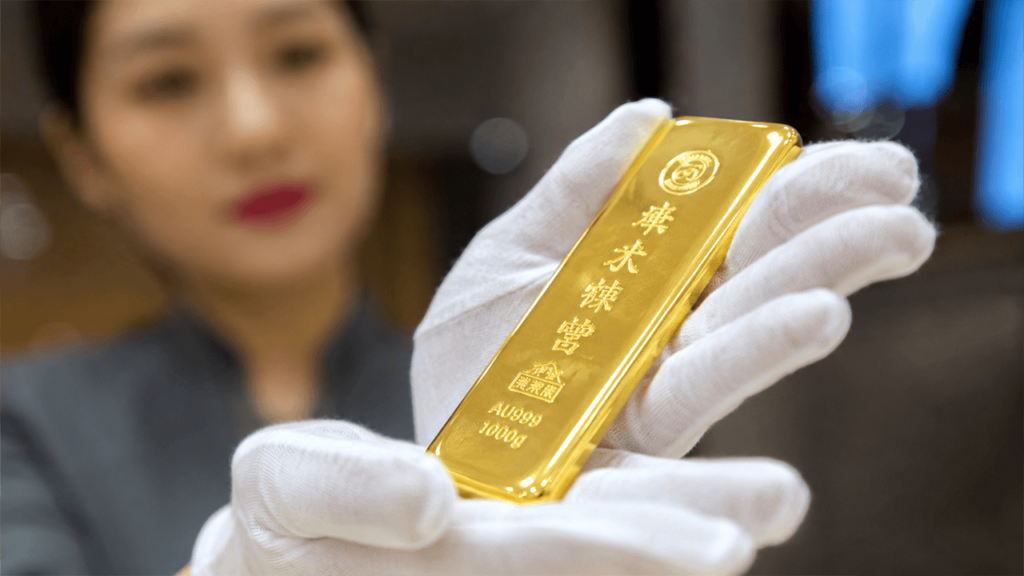
China delivered another powerful tailwind. The People’s Bank of China stretched its gold-buying campaign to 21 straight months in July, scooping up about 20 tonnes, or roughly 640,000 ounces.
Official Chinese reserves climbed to about 76.08 million ounces by the end of July. Chinese gold exchange-traded funds have also drawn fresh inflows, stacking investor demand directly on top of persistent central bank accumulation.
Central banks prize gold because it carries no dependence on another government or currency issuer. That steady institutional bid has repeatedly put a floor beneath prices, even when a stronger U.S. dollar should have squeezed bullion harder.
Geopolitical Risk Keeps Buyers Circling
Persistent U.S.-Iran tensions have added another reason to keep gold close, particularly because trouble around the Strait of Hormuz could disrupt global oil supplies and reignite inflation fears.
That leaves gold caught in a familiar two-sided trade. Expensive oil can revive inflation and tighter monetary policy, hammering bullion, while geopolitical instability simultaneously sends defensive capital running straight toward the metal. Gold proponent and economist Peter Schiff thinks this trend will continue.
“Gold and silver rallied today, along with oil’s 5% rise,” Schiff wrote on the social media platform X. “Metals are breaking free of the recently developed negative correlation with oil. Gold and oil should rise together, as inflation pushes the CPI and bond yields higher, while the U.S. economy weakens as more jobs disappear.”
Schiff continued in another X post, stating:
“Gold is now above $4,400. Silver is approaching $66. The market is telling you something. Are you listening?”
Inflation Data Could Make or Break the Rally
The next showdown is U.S. inflation data. A softer consumer price index (CPI) could further weaken the case for Fed tightening and give gold another shot at turning its recent breakout zone into durable support.
A hotter print could quickly wreck that setup by pushing Treasury yields and the dollar higher. Traders are now eyeing $4,500 and gold’s 200-day moving average to see whether this comeback has another leg or becomes another failed breakout after a blistering recovery.