Paul Sztorc’s Bitcoin Fork ECX Rips Past 25,000 Blocks in Just 13 Hours – Bitcoin News
Key Takeaways
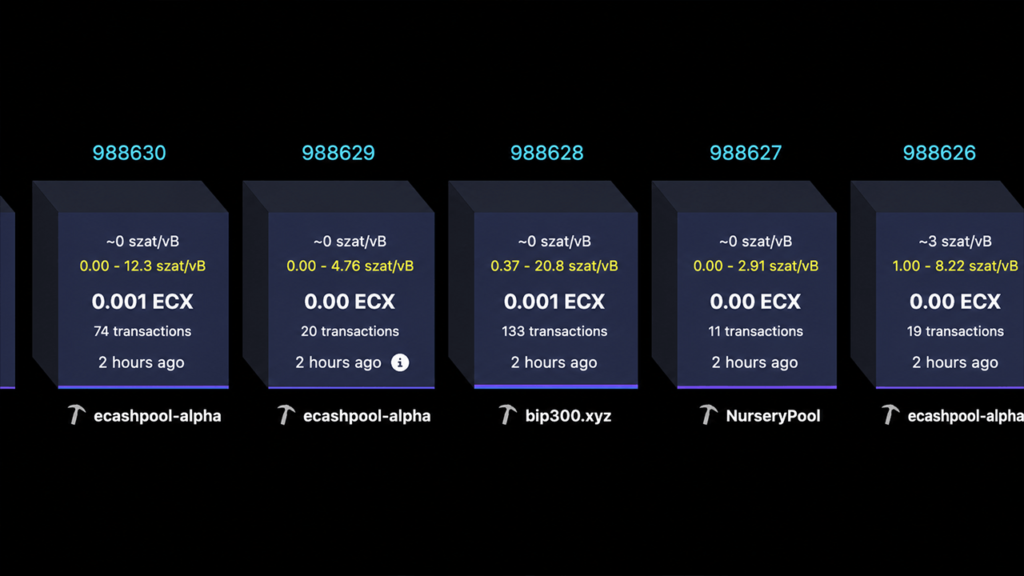
As of 9 a.m. EDT on Sunday, Paul Sztorc’s ECX logged 25,000+ blocks in roughly 13 hours after launching at block 963648. Currently, the project is in testing/pre-Alpha phase.ECX drew 3.53 PH/s as Ecashpool-alpha led a growing field of miners and pools.ECX remains unpriced, with Oct. 31, 2026, looming as the fork’s next major milestone.
ECX Blasts Through 25,000 Blocks in 13 Hours
Bitcoin’s latest fork has kicked off its Alpha stage, with Drivechain creator Paul Sztorc’s ECX network going live at block height 963648. As of 9 a.m. Sunday, Aug. 23, the new network had already ripped through more than 25,000 blocks in barely 13 hours. Block intervals have been blisteringly fast because the network’s difficulty started at 1, just as Bitcoin did when it launched in 2009.
As of 9 a.m. EDT, after a barrage of difficulty changes every 2,016 blocks, ECX has watched its difficulty rocket to 16.78 million. Metrics currently show miners throwing 3.53 petahash per second (PH/s) at the ECX chain. If every miner were running the original Bitmain Antminer S19, the non-Pro model pushing 95 terahash per second (TH/s), that would equal nearly 36 Antminer S19s hammering away at Sztorc’s fork.
But miners can obviously deploy practically any old Antminer, including the vintage S9, alongside brands like Sealminers, Whatsminers, Bitaxes, Nerdaxes, or even the weakest hashrate-producing machines to chase the Alpha rewards. What immediately separates this fork from the failed BIP-110 fiasco earlier this month is the mining support. ECX is clearly attracting more miners willing to put actual hashrate behind the chain.
Miners Throw Real Hashrate Behind Sztorc’s Fork
The 3.53 PH/s of hashrate is spread across several pools, with Ecashpool-alpha commanding the lead. Kikko, L2L Pool, Nurserypool, Ckpool, Solo, Guilastuce, BIP300.xyz, Layertree and Avonpool account for the rest. With the ECX chain’s difficulty still low, blocks are flying in at a pace that makes Bitcoin’s regular ten-minute intervals look glacial. But while ECX already has miners and a small collection of wallets, the crypto asset ecash (ECX) still has no established market value.
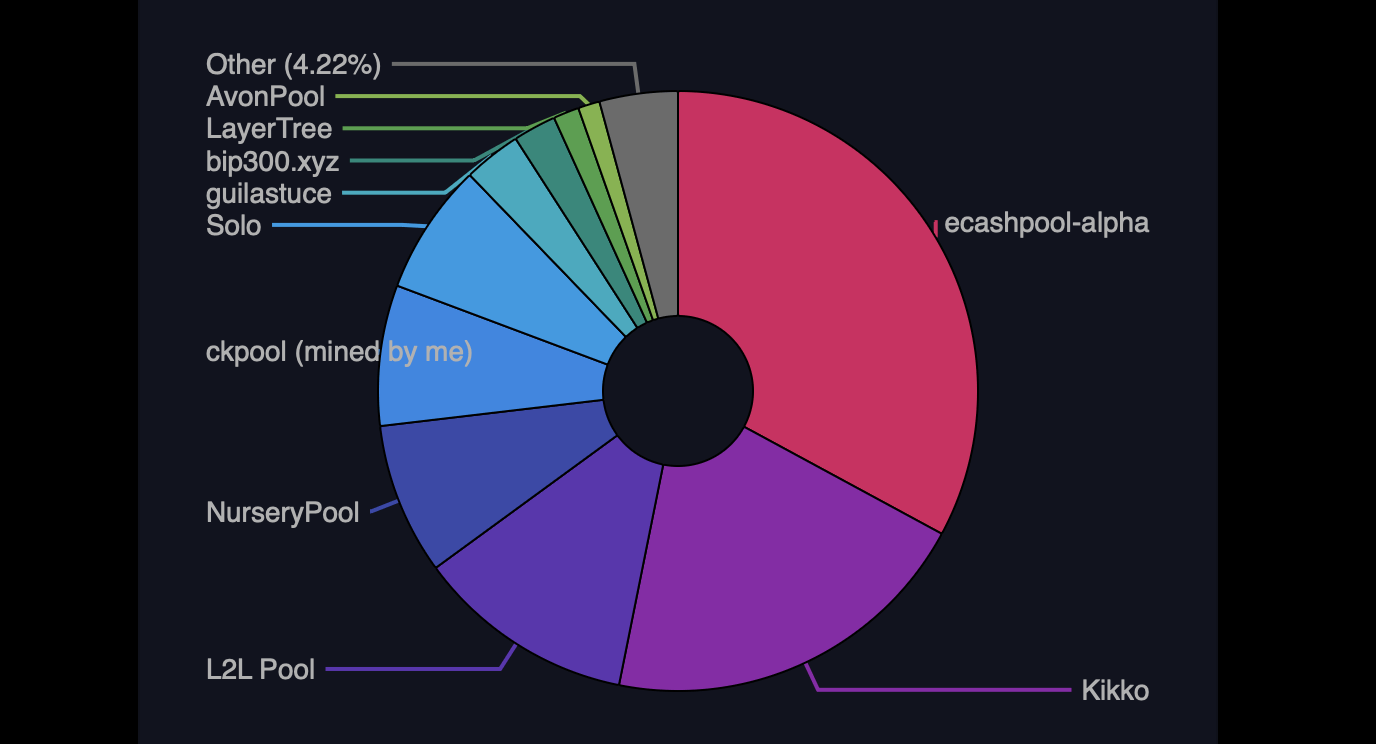
ECX is not yet listed on crypto exchanges, leaving it without a definitive price or real trading arena, and that may not change until the network’s third and final phase on the 18th anniversary of Bitcoin’s white paper, Oct. 31, 2026. Still, comparing Sztorc’s fork with the BIP-110 event exposes a stark contrast: One has measurable mining support, while BIP-110 simply did not.
ECX Faces Its Hardest Test After the Mining Blitz
Still, the opening burst proves technical viability, not economic staying power. Once difficulty stabilizes and block rewards thin out, miner enthusiasm could evaporate without a tradable price. The long wait until October 2026 is a graveyard for momentum because hype dies fast. On the other hand, this early burst could signal that genuine support exists, momentum could build, and infrastructure providers such as wallets and centralized crypto exchanges may see enough activity to start listing ECX.
Only time will tell.