Circle Exec Slams Germany’s Proposed 50% Crypto Tax Penalty

Key Takeaways
Germany proposed a 50% tax basis on crypto sales if taxpayers lack credible proof of their purchase costs.Circle’s Patrick Hansen warned this hits everyday investors hard, forcing them to overpay taxes on losses.Experts warn the rule poses severe liquidity risks for transfers from self-custody to German exchanges.
Circle’s Patrick Hansen Criticizes German Crypto Tax Reform
The cryptocurrency tax reform proposed by the Federal Ministry of Finance (BMF) in Germany is worrying industry actors about the effects of some of its considerations for regular cryptocurrency holders.
Patrick Hansen, Senior Director, EU Strategy & Policy at Circle, the largest MiCA-regulated stablecoin issuer, has rejected the planned 50% substitute assessment basis, which would affect taxpayers who fail to provide credible purchase information for their cryptoassets to the tax agency.
On social media, Hansen, who had warned about the state of stablecoins under the Markets in Crypto Assets (MiCA) framework, declared that if taxpayers cannot provide this proof, the agency will assume the cryptocurrency purchases were executed after December 31, 2026, with taxes being calculated over 50% of the sales proceeds.
He warned that this proposal, if passed as is today, will hit the less crypto-savvy retail users hard, and they usually have less technical experience with crypto and taxes.
“This will hit normal consumers/investors particularly hard. People who don’t even notice this regulatory change, who can’t technically provide their acquisition costs in a clean way, and who in recent years have sometimes bought with little profit or even at a loss,” Hansen explained.
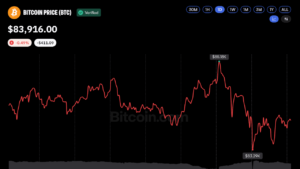
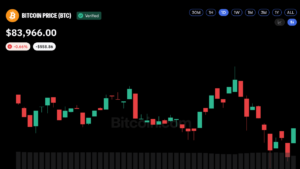
Hansen highlighted that the implicit assumption of prices doubling seems high for him, as Bitcoin is at a lower price than a year ago, and other crypto assets have underperformed during this period.
“In my view, the average Joe will end up paying far too much tax if this isn’t adjusted, especially if – as I fear for many – he can’t provide his acquisition costs in a clean and convincing way,” he concluded.
Nonetheless, Dr. David Hötzel, Associated Partner at Poellath, pointed out that this 50% consideration is not final, but it acknowledges that it creates significant liquidity risks. Nonetheless, Hötzel acknowledged that this would affect transfers from self-custody wallets or foreign platforms to German exchanges, subject to deductions.
As a result, Hötzel highlighted that “the protection of existing holdings effectively depends on reliable documentation,” as this tax base can trigger a high provisional deduction even in low actual profit cases, siding with Hansen’s assessment.