
Crypto Hack Top $11.4B, Cyber Threat Spread Across 10 Countries

The cryptocurrency industry has lost more than $11.4 billion to hacks and exploits across 2025 and 2026. The attacks have exposed weaknesses in exchange infrastructure, wallet security, and blockchain networks.
AI-powered attacks are spreading beyond crypto exchanges, with cyber incidents reported across at least 10 countries in the past 48 hours.
Crypto Hack Losses More Than Triple in 2026
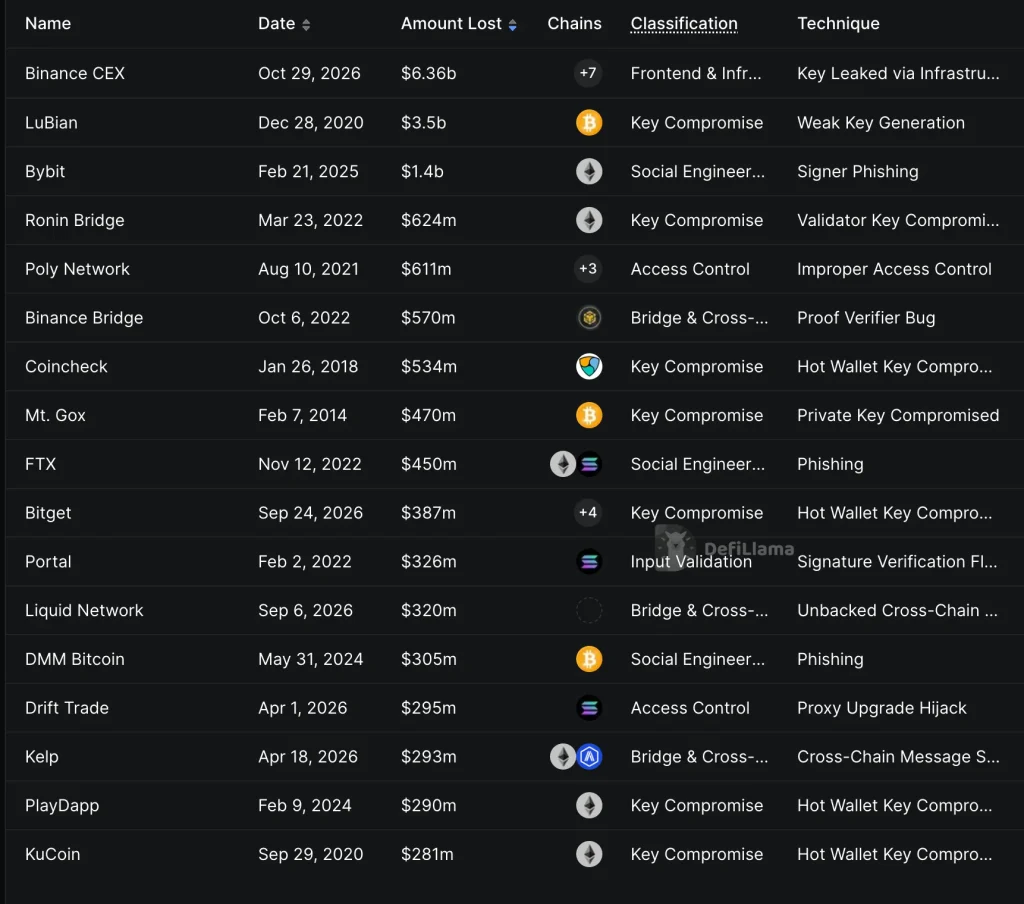
Data from DeFiLlama’s Hacks shows that the crypto industry recorded approximately $2.7 billion in losses during 2025. By 3 November 2026, reported losses had more than tripled to $8.776 billion across 328 incidents.
The February 2025 Bybit hack was one of the year’s biggest attacks, with around $1.5 billion in assets stolen.

However, 2026 has been far more costly, largely due to the 29 October Binance breach, which accounts for $6.36 billion in reported losses.
The Binance attack stands out because of how quickly hackers moved the stolen funds. Investigators traced them through around 12,000 wallets across 11 blockchains in less than four days.
That is roughly one new wallet every 25 seconds.
However, the FBI linked the attack to North Korea’s TraderTraitor hacking unit, which stole more than $6 billion in virtual assets and converted much of the funds into Ether.
Here are some of the largest crypto attacks reported over the past years.
AI Is Making Cyberattacks Faster and Easier
Artificial intelligence is helping hackers carry out attacks in less time and with less effort.
Google researchers found that attackers built and launched an automated tool to steal login details in under six hours. Anthropic also reported AI-assisted attacks in which hackers completed breaches within two to three hours.
AI can help hackers find weak points in computer systems, create harmful software, steal passwords, and attack several targets at once. This means attacks that once needed large teams and days of preparation can now happen much faster with fewer people.
Cyberattacks Hit 10 Countries as Governments Urge Emergency Supplies
The cybersecurity concerns have also spread beyond digital assets. Hackers have targeted at least 10 countries in the past 48 hours, disrupting services and spreading false emergency alerts.
Europe: Supermarket freezers in seven countries were hacked, with some heating to 50°C. Around 700 French supermarkets were also attacked last month, causing tens of millions of euros in estimated losses.Ukraine and Russia: Emergency apps sent false warnings about nuclear strikes and chemical threats.Germany: Lawmakers were told to treat their iPhones as potentially compromised after Apple spyware alerts.Brazil: Mercado Bitcoin halted withdrawals after hackers stole more than $40 million across at least 10 blockchains.United States: A substation failure cut power to parts of Washington, D.C., ahead of the midterm elections.
The UK has asked households to keep enough food and water for three days, while Japan recommends storing supplies for a full week.
At least 16 countries have issued similar advice.
Was this writing helpful?
Story Ends Here
Trust with CoinPedia:
CoinPedia has been delivering accurate and timely cryptocurrency and blockchain updates since 2017. All content is created by our expert panel of analysts and journalists, following strict Editorial Guidelines based on E-E-A-T (Experience, Expertise, Authoritativeness, Trustworthiness). Every article is fact-checked against reputable sources to ensure accuracy, transparency, and reliability. Our review policy guarantees unbiased evaluations when recommending exchanges, platforms, or tools. We strive to provide timely updates about everything crypto & blockchain, right from startups to industry majors.
Investment Disclaimer:
All opinions and insights shared represent the author’s own views on current market conditions. Please do your own research before making investment decisions. Neither the writer nor the publication assumes responsibility for your financial choices.
Sponsored and Advertisements:
Sponsored content and affiliate links may appear on our site. Advertisements are marked clearly, and our editorial content remains entirely independent from our ad partners.
Read the Next News