
Magnificent 7 Stocks Lose $1 Trillion, but Their Shift Is Just Beginning: Devere CEO
Key Takeaways
Tesla and Nvidia each sank more than 9% on Thursday, Nov. 5, while Apple slipped just 1.5%.Green says investors will now grill each giant on customers and power.The Devere CEO sees capitulation in the sell-off and expects a more durable run.
Green Predicts a Shift in How Investors Buy Tech
Nigel Green, CEO of financial advisory firm Devere Group, assessed the Magnificent 7’s loss of more than $1 trillion on Nov. 5 in comments sent to Bitcoin.com News on Nov. 6. He argued that their established businesses supported continued growth. Green stated:
“Wiping $1 trillion off the tech super pack in a day naturally makes people ask whether its reign is over. The answer is no.”
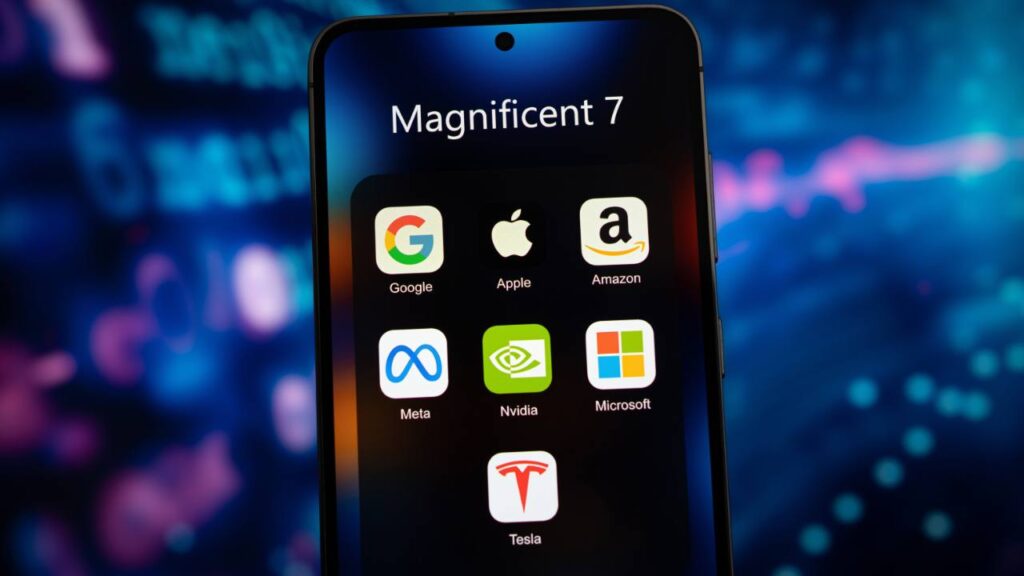
The Magnificent 7 comprises major U.S. technology and technology-related stocks: Apple, Microsoft, Nvidia, Amazon, Google parent company Alphabet, Meta, and Tesla. Their businesses span cloud computing, chips, smartphones, advertising, and online retail.
Looking ahead, he explained: “What’s finished is the habit of buying all seven as one trade. From here, each will be judged on its own numbers, and many investors will see this sell-off as a chance to buy the dip.”
Uneven Losses Put Company Results in Focus
On Nov. 5, Tesla sank 10.77% and Nvidia fell 9.26%, while Apple declined 1.53%. Microsoft lost 3.58%, Meta dropped 3.96%, Amazon slid 2.19%, and Alphabet fell 2.20%. Green said:
“Even in a panic, investors picked their targets. The market has started sorting the Magnificent 7 into stronger and weaker hands.”
Across Wall Street, the damage included the S&P 500 losing 4.4% and the Nasdaq 5.5%. The Dow Jones Industrial Average dropped 1,833 points. All 11 S&P 500 sectors closed lower. AI stocks came under pressure on concerns that Democratic victories in the midterm elections could lead to moratoriums on data centers.
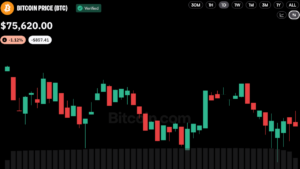
By about 9:42 a.m. EST on Nov. 6, Nvidia had rebounded 6.9%, while Tesla gained 2.8%, Meta rose 2.5%, Alphabet added 2.3%, and Amazon advanced 1.1%. Apple and Microsoft remained lower, down 1.3% and 1.1%, respectively. Bitcoin traded near $75,249 on Nov. 6 after touching $74,762. It was about 11.3% below the $84,843 level reached in late October.
The cryptocurrency had also retreated during the Nov. 5 session. Michael Saylor’s comparison of market losses put bitcoin’s decline at about 5% on Nov. 5, alongside the sharper fall in the Nasdaq. His figures showed that the downturn reached digital assets as well as technology shares.
Financing costs complicated the outlook for AI infrastructure. Bitfinex’s analysis of technology financing on Nov. 2 highlighted growing concerns about borrowing costs and increasing reliance on credit to fund capital spending. The assessment added a financing consideration to Green’s emphasis on evaluating individual businesses.
AI Revenue and Power Supplies Shape Green’s Outlook
Customer ownership, secured electricity supplies, and revenue from AI spending were Green’s proposed tests for technology companies. Calls for restrictions on data centers also created uncertainty for infrastructure expansion, including projects involving bitcoin miners. These proposals placed construction approvals alongside financing and power availability among the considerations facing developers.
The Nov. 5 selling showed signs of capitulation, in Green’s assessment. He pointed to a spike in the VIX, which measures expected S&P 500 volatility over the next 30 days, and widespread share declines as indications that forced sellers could be clearing positions. While anticipating further volatility, the executive maintained that demand for computing power continued to grow.
His longer-term forecast centered on a possible change in the group’s leadership. He stated: “Corrections like this squeeze out excess and reward discipline. The super pack will likely keep leading the AI boom, though perhaps with a different pecking order at the top.” Green added:
“A sharper, more selective market should make the next stage of its run far more durable than the last.”