

NVIDIA Scandal Hits Crypto: Bitcoin Drops, $1B Liquidated
The Nvidia scandal hits crypto hard as its board opened an independent investigation into CEO Jensen Huang after reports of his relationship with a woman U.S. intelligence agencies believe may have ties to Chinese intelligence. The news broke over the weekend of November 8–9, 2026, when traditional U.S. equity markets were closed. Crypto markets, which never sleep, reacted first and sharply.
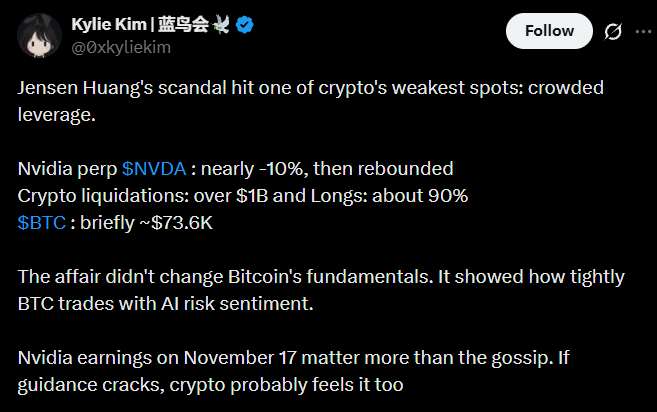
Bitcoin briefly fell below $74,000, its lowest level since August. Ethereum dropped more steeply below $2,100. According to data cited across multiple reports, more than $1 billion in leveraged cryptocurrency positions were liquidated within 24 hours, the large majority of them long positions. Nvidia perpetual futures on platforms such as Hyperliquid and Binance, along with tokenized Nvidia shares, declined roughly 3–4 percent ahead of the regular market open.
How a Personal Scandal Became a Market Event
Huang admitted in an internal memo that he had been unfaithful to his wife. The woman involved, Alice Huang (also referred to as Huang Le), is a former executive at Singapore-based cloud company Megaspeed. U.S. intelligence assessments, and widely covered, alleged she had been recruited by China’s Ministry of State Security. Nvidia stated it has no reason to believe company secrets or national security information were compromised, and Huang said he would fully cooperate with the board’s review.
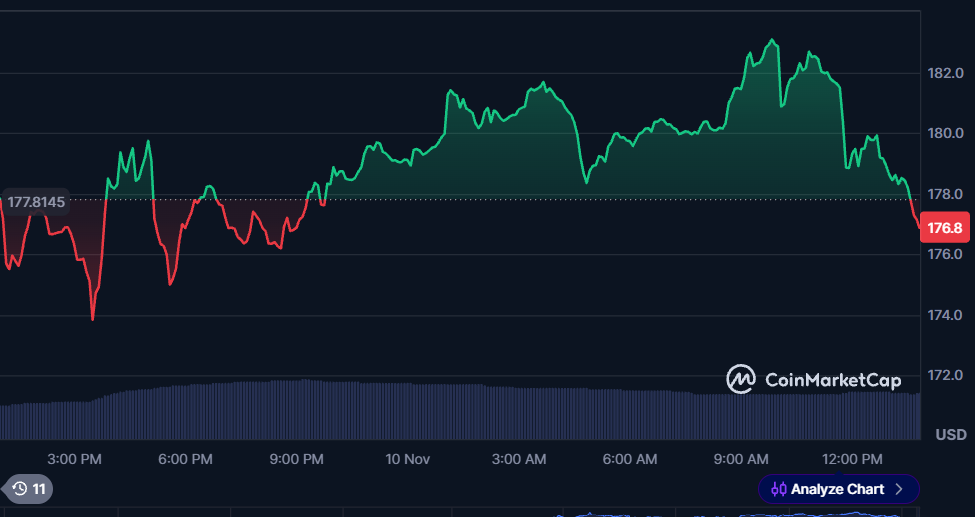
The timing mattered. With Wall Street closed, crypto platforms became the primary venue for pricing the uncertainty. Nvidia’s NVDA-USDC perpetual futures on Hyperliquid fell about 3.8 percent to around $180.50, with elevated trading volume. Tokenized Nvidia shares (NVDAX) showed similar pressure, trading at a discount to Friday’s Nasdaq close and signaling that crypto traders expected a sharper move once traditional markets reopened.
Analysts described the reaction as a classic risk-off move amplified by leverage. Dan Khus of LVRG Research said that the slide in Nvidia perps reflected broader aversion to risk assets, with leveraged positioning magnifying the swings. Ethereum’s steeper decline and higher liquidation totals relative to Bitcoin underscored the greater sensitivity of altcoins in such environments.
Why Crypto Moved With an AI Chipmaker
The episode highlights an uncomfortable reality for an industry that often claims independence from traditional finance. Nvidia sits at the center of the AI boom that has supported risk appetite across equities and digital assets for years. Many large Bitcoin miners have shifted capacity toward AI computing, tightening the narrative link between Nvidia’s fortunes and crypto sentiment.
When a company of Nvidia’s scale faces governance and potential national-security questions, the effects travel quickly through correlated risk assets. Crypto’s continuous trading simply made the transmission visible sooner. As one analytical piece noted, it becomes harder to argue that cryptocurrencies operate independently of Wall Street’s risk calculus when problems at a leading technology firm coincide with cascading liquidations while equity markets are closed.
That said, single-session causality should not be overstated. Macro uncertainty, thin weekend liquidity, prior pressure on AI and chip stocks, and elevated leverage all contributed. Some market participants even suggested that a deeper tech sell-off could eventually divert capital toward digital assets, though that thesis remains unproven in the current environment.
Broader Implications for Correlation and Risk
The weekend events serve as a live stress test of crypto’s dependence on the AI narrative. Prediction markets on platforms such as Polymarket and Kalshi quickly opened contracts on Huang’s potential departure, showing how rapidly crypto-native venues absorb and monetize traditional-market uncertainty. Whales also moved: at least one large Hyperliquid account opened a multi-million-dollar short on Nvidia perps shortly after the memo circulated.
For traders, the practical takeaway is straightforward. Crypto no longer trades in isolation. Leadership risk, geopolitical scrutiny, and AI-sector sentiment now form part of the same information set that moves Bitcoin and Ethereum. The $1 billion-plus liquidation wave demonstrated how quickly leveraged positioning can turn a weekend headline into forced selling.
Markets have partially recovered from the initial lows, and traditional equities have begun to digest the same information. The longer-term impact will depend on the board investigation’s findings, any congressional scrutiny, and whether the episode dents confidence in Nvidia’s leadership or the broader AI investment thesis.
For now, the episode has reinforced a simple analytical point: when the market’s most valuable AI company faces questions, crypto feels the tremors first.

Editorial Process for bitcoinist is centered on delivering thoroughly researched, accurate, and unbiased content. We uphold strict sourcing standards, and each page undergoes diligent review by our team of top technology experts and seasoned editors. This process ensures the integrity, relevance, and value of our content for our readers.