
Binance Founder CZ Says Nvidia Made a Mistake Letting CEO Jensen Huang Resign
Key Takeaways
Huang left Nvidia’s CEO, president, and board positions immediately.Directors opened an inquiry into a reported foreign intelligence effort.Kress will retain her finance role while serving as interim CEO.
CZ Challenges Nvidia’s Leadership Change
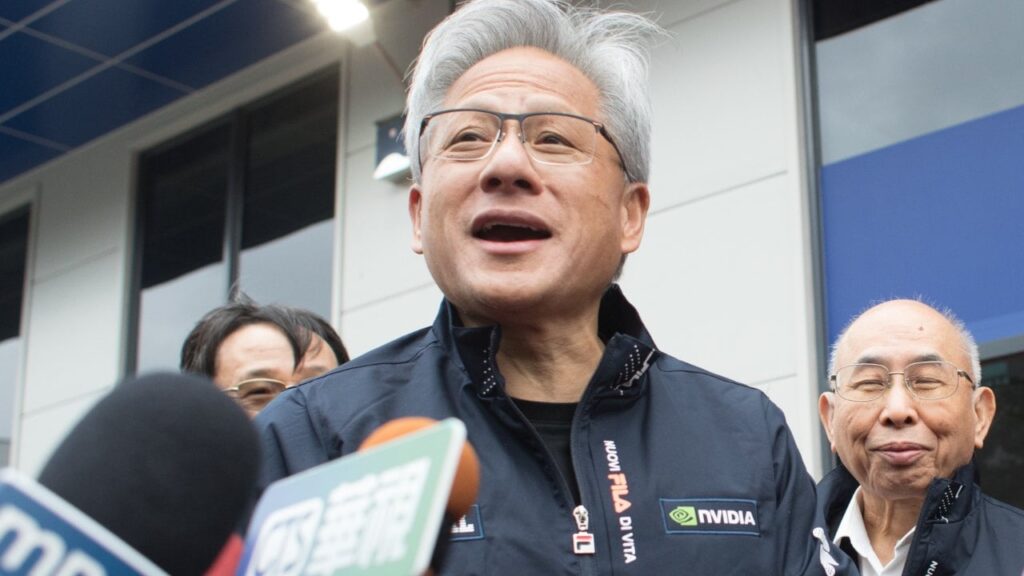
Binance co-founder Changpeng Zhao, known as CZ, criticized Nvidia on Nov. 12 after the chipmaker disclosed Jensen Huang’s resignation. Zhao opposed Huang’s departure, stating on X:
“It’s a mistake for Nvidia to let Jensen resign.”
Nvidia Corp. (Nasdaq: NVDA) disclosed that directors accepted Huang’s resignation on Nov. 11, effective immediately. He left the president and CEO positions along with his board seat. Nvidia Executive Vice President and Chief Financial Officer Colette Kress became interim CEO while retaining her finance responsibilities.
Tesla and Spacex CEO Elon Musk also expressed support before the resignation announcement. Responding to a suggestion that he hire the Nvidia co-founder, Musk indicated that hiring Huang would be an honor. His response preceded CZ’s criticism of the departure.
Kress joined Nvidia in September 2013 following finance roles at Cisco and Microsoft. Directors said they will consider internal and external candidates for permanent CEO. Harvey C. Jones, a technology entrepreneur and Nvidia director since 1993, became the company’s first board chair. Directors said they expected operations, customer commitments, and the product roadmap to continue without interruption.
Affairs and Espionage Allegations Preceded the Exit
The controversy involved Huang’s affair with Alice Huang, a former executive at Megaspeed, a Singapore-based cloud computing provider and Nvidia customer. He apologized to employees Nov. 8 for being unfaithful to his wife. U.S. intelligence officials reportedly alleged that Alice Huang acted as a Chinese intelligence asset, an accusation that Beijing denied.
The New York Times reported Nov. 11 that Huang also had a relationship with Kimberly Powell, Nvidia’s vice president of health care, who reported directly to him. Nvidia declined to comment, and Powell did not respond to the newspaper.
On Nov. 8, the board opened an independent investigation into a reported foreign intelligence effort targeting Huang, overseen by independent directors with outside counsel. Directors prioritized U.S. national and economic security. At that time, they expressed confidence in Huang and stated they had no reason to believe national security or company secrets had been compromised.
Crypto Traders Took Positions Before the Resignation
Before U.S. stock markets opened Nov. 9, Nvidia perpetual futures and tokenized shares had each fallen around 6%. Perpetual futures track an underlying asset’s price and have no expiration date. Those moves occurred during the developing controversy, ahead of the leadership announcement.
A wallet tracked on Nov. 9 held a roughly $5.4 million Nvidia short position on Hyperliquid, a decentralized trading platform. The position comprised 30,000 contracts at 10 times leverage, with an average entry price of $181.33. Trades spanned late Nov. 8 and early Nov. 9, and the position showed an unrealized gain of about $67,000 at the Nov. 9 observation.
These perpetual futures contracts allow leveraged exposure without owning the underlying shares. Leverage magnifies gains and losses relative to posted collateral, the assets deposited to secure a position. Nvidia maintained its Nov. 17 fiscal 2027 third-quarter results release and earnings call.
Nvidia (NVDA) shares have taken a beating in recent days amid the controversy. They recently traded near $165, down about 5% on the day, after falling to $150 earlier Thursday following Huang’s resignation. Over the last month, NVDA shares have fallen more than 27%.