
VeChain Founder Sunny Lu Reveals $300 Scam That Sparked VET Creation

Jessie A Ellis
Mar 09, 2026 18:07
Sunny Lu shares how losing 100 BTC to a Taobao scam in 2012 led him to build VeChain, now processing 530M+ transactions with Walmart and BMW partnerships.
VeChain founder Sunny Lu just revealed an origin story most crypto executives would bury. In 2012, he lost 100 Bitcoin—worth roughly $8 million at today’s prices—to a Taobao scammer while trying to buy in-game gold for World of Warcraft. That $300 mistake didn’t push him away from crypto. It pulled him deeper.
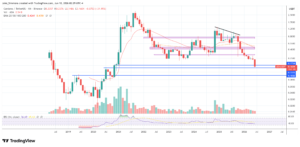
VET currently trades at $0.00686 with a market cap of $589.5 million, down 1.85% over the past 24 hours.
From Scam Victim to Whitepaper Student
Rather than walking away bitter, Lu opened the Bitcoin whitepaper. What grabbed him wasn’t the price speculation—it was the architecture. “A trustless ledger with no intermediaries and records nobody can change,” he recalled in a new Medium post from the VeChain Foundation.
At the time, Lu served as CIO of Louis Vuitton China, building track-and-trace systems that followed luxury goods through complex supply chains. The blockchain concept hit different for someone already wrestling with multi-party data problems daily.
His question wasn’t “how do I make money?” It was “what if multiple parties could read from the same immutable ledger without any single company owning it?”
The Vitalik Meeting That Changed Everything
In late 2015, Bo Shen of Fenbushi Capital introduced Lu to a young Vitalik Buterin in Shanghai. Hours of conversation about smart contracts and the EVM crystallized what Lu had been mulling since the scam.
Neither Bitcoin nor Ethereum fit enterprise requirements. The governance models, transaction economics, and data structures all missed the mark for supply chain applications. Lu decided to build from scratch.
VeChain—originally “Verification Chain”—launched that same year as a subsidiary of Bitse. The founding conviction: blockchain only matters if it does something real.
Enterprise Deployments, Not Whitepaper Promises
The results speak for themselves. Walmart China uses VeChain to trace food from farm to shelf. BMW built VerifyCar on the network to combat odometer fraud. UFC embedded NFC chips in fighter gloves for charity auction authentication.
The numbers: 100% uptime since 2017, 530 million transactions processed.
In 2018, the project rebranded to VeChain Thor, launched its own Proof-of-Authority blockchain, and swapped VEN tokens for VET at a 1:100 ratio. The dual-token model separates gas costs from governance—a design choice reflecting Lu’s enterprise DNA.
Consumer Push and Technical Outlook
The VeBetter ecosystem now hosts 50+ consumer apps rewarding sustainable behavior with tokens. Five million users have logged 48 million verified on-chain actions for recycling, fitness, and environmental cleanups.
Technical analysts recently flagged VET as a potential breakout candidate, citing possible 50% gains if key resistance levels break. Canadian market adoption guides have highlighted the project’s regulatory standing and enterprise credibility.
A decade after a $300 scam that could’ve ended his crypto journey before it started, Lu’s still shipping code. The market will decide what that persistence is worth.
Image source: Shutterstock