

What Is Courtyard NFT? The Platform Quietly Beating CryptoPunks in Weekly Sales — Without a Single PFP
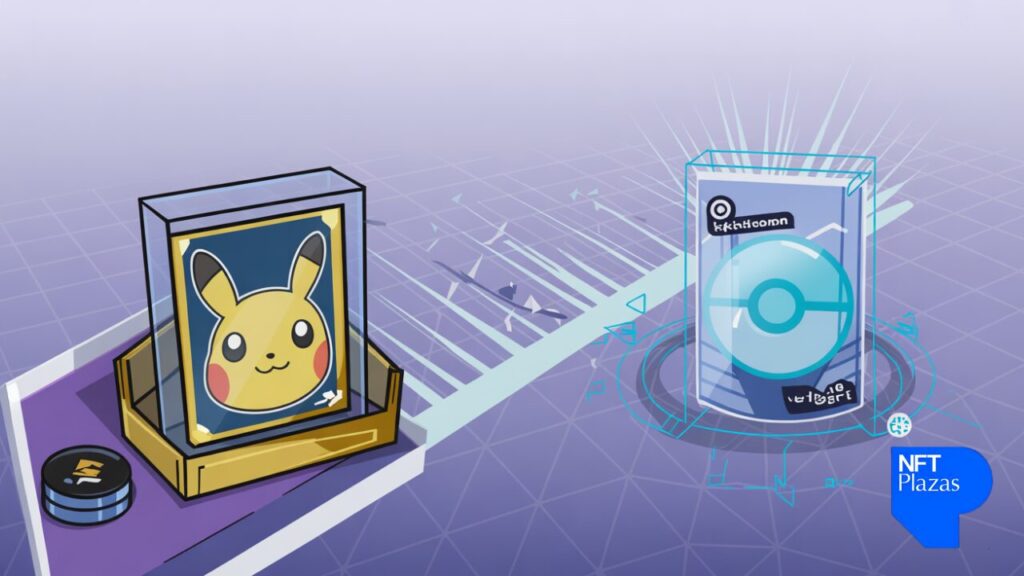
There are no cartoon apes. No pixelated punks. No penguin profile pictures. And yet, week after week, a platform called Courtyard is sitting comfortably at the top of the NFT sales charts — quietly outpacing some of the most iconic names in crypto collectibles history.
So what exactly is Courtyard, and how is it pulling this off?
What Is Courtyard NFT?
Courtyard is a marketplace built on the Polygon blockchain that does something genuinely different in the NFT world: it tokenizes real, physical collectibles. We’re talking about graded Pokémon cards, sports cards, and other high-value physical items that collectors actually hold, grade, and treasure in the real world.
Here’s how it works.
A collector sends their physical item — say, a PSA-graded first-edition Charizard — to a Brink’s vault. Yes, that Brink’s, the global security giant that typically guards gold bars and fine art. Courtyard then mints an NFT on the Polygon network that represents legal ownership of that exact physical card. From that point on, the card can be bought, sold, or traded entirely online, without anyone ever having to ship it anywhere. If an owner eventually wants the physical card in their hands, they can redeem it at any time.
It’s a simple idea with a surprisingly elegant solution to a problem that has plagued online collectibles trading for decades: how do you trust that what you’re buying is real, and how do you trade it safely?

What Is Courtyard NFT?
The Numbers That Are Turning Heads
Courtyard isn’t just an interesting concept anymore — it’s a dominant market force, and the April 2026 data makes that undeniable.
For the week ending April 20, 2026, Courtyard ranked first among all NFT collections globally by weekly sales volume, posting $7.82 million on the Polygon blockchain, according to The Market Periodical. That figure came during a week when total NFT sales across all platforms reached $60.42 million, a 12.12% increase, with NFT buyers surging nearly 92% to over 103,000 participants.
The week prior told an equally striking story. According to CryptoSlam data published on April 19, 2026, Courtyard led the entire top-10 NFT rankings with $8.6 million in sales, 101,767 transactions, and 15,744 buyers — dwarfing every other collection on the list. CryptoPunks, by contrast, came in ninth place that same week, with an overall declining trend in sales, transactions, buyers, and sellers.
That contrast tells an important story. When CryptoPunks does post big weekly numbers, it’s typically a handful of ultra-wealthy collectors making massive single trades. Courtyard’s numbers reflect tens of thousands of everyday transactions from a broad, active user base — a fundamentally different kind of market health.

Courtyard Data on Opensea
Consistent Dominance, Not a One-Week Flash
What’s remarkable about Courtyard’s position isn’t just any single week — it’s the consistency. At the end of March 2026, Courtyard again dominated the top-10 NFT rankings with $6.29 million in sales and over 80,000 transactions, attracting more than 11,600 buyers. Around the same period, Cryptonomist reported Courtyard posted $6.47 million in volume from 78,925 transactions and 10,960 buyers, with buyer numbers rising over 653% from the previous period — a sign of rapidly expanding participation, not just repeat traders cycling through the same assets.
As of 2026, CryptoSlam’s tracker shows Courtyard has a total supply of over 5.1 million NFTs, representing a staggering number of real, physical collectibles that have been vaulted, authenticated, and brought on-chain.
Why It Works: Real Things, Real Value
The secret to Courtyard’s traction lies in a broader trend reshaping the crypto space: real-world asset (RWA) tokenization. The concept is straightforward — take something valuable that exists in the physical world, put verifiable proof of its ownership on a blockchain, and suddenly it becomes far easier to trade, verify, and transfer globally.
For collectibles, this solves genuine, longstanding problems. Anyone who has sold a rare card on eBay knows the anxiety of shipping a fragile, irreplaceable item across the country. Anyone who has bought one knows the uncertainty of trusting a seller’s photographs. Courtyard eliminates both. The physical item never moves unless the final owner requests it, and the NFT’s on-chain history provides a transparent, tamper-proof record of every ownership transfer.
Nicolas le Jeune, Courtyard’s co-founder and CEO, started the company after noticing the natural overlap between trading cards and NFTs. Trading cards, he has argued, are essentially the grandfather of NFTs — both are collectible items that people love and assign real value to, trading hands based on rarity, condition, and nostalgia. The goal from day one was to make the experience feel as seamless as buying anything else online: no crypto complexity, no gas fees passed to the user, just a clean interface where the blockchain does the heavy lifting in the background.

Why It Works: Real Things, Real Value
Pokémon, Polygon, and a Growing Universe
Courtyard launched with Pokémon cards deliberately. The generation that grew up collecting them is now old enough to have disposable income and a comfort level with digital transactions. The first drop — sealed packs that buyers could open and reveal digitally, replicating the classic childhood experience — minted out within hours.
Since then, the platform has expanded well beyond its origins, bringing millions of physical collectibles onto the blockchain. Polygon was a natural fit as the underlying network. Its low transaction fees and high throughput make it practical for a marketplace where items might sell for anywhere from $20 to hundreds of thousands of dollars — Courtyard once hosted an auction for a rare 1st edition Charizard that drew bids approaching $180,000. Running those volumes on Ethereum’s mainnet would have made smaller trades economically unviable, pricing out the everyday collector entirely.
Today, Courtyard has 459,732 NFTs tracked on CoinGecko alone, held by 66,754 unique owners, with the CryptoSlam total supply figure suggesting the full ecosystem runs into the millions of tokenized items.

Courtyard Pokemon Pack
A Maturing NFT Market Finds Its Footing
Courtyard’s rise also reflects something broader happening in the NFT space in 2026. Industry analysts note that the market is moving away from speculative hype toward more sustainable digital asset models Reelfinancial — and in that environment, platforms with clear, tangible value propositions are the ones holding up.
Recent data shows that while buyer participation has rebounded sharply, the gap between buyer growth and sales volume growth suggests new entrants are deploying smaller amounts of capital — cautious but genuine engagement, the kind that tends to build lasting markets rather than boom-and-bust cycles.
Courtyard sits perfectly in that moment. Its NFTs aren’t valuable because of hype cycles or celebrity endorsements. They’re valuable because there is a real, graded, authenticated physical object sitting in a vault that corresponds to each token. That’s not a pitch — it’s just a fact you can verify.
The Bigger Picture
The NFT projects that dominated 2021 sold digital bragging rights dressed up as art. Courtyard is selling something older and more universal: the joy of collecting, minus the friction that has always made it frustrating. No shipping risk. No authenticity anxiety. No geographic barriers to finding the card you’ve been hunting for years.
Analysts note that Courtyard’s concentration of activity on Polygon has had a measurable impact at the chain level, with its explosive performance single-handedly driving massive spikes in Polygon’s weekly NFT sales metrics. That’s the kind of influence usually reserved for Ethereum blue-chips.
Week after week in April 2026, with no cartoon avatars and no celebrity drops, Courtyard keeps showing up at the top of the charts. At some point, that stops being a surprise and starts being the story.