Treasury Seizes $1 Billion in Iran-Linked Crypto, Scott Bessent Confirms at Reagan Forum – Bitcoin News
Key Takeaways
Treasury Secretary Scott Bessent says the U.S. has seized roughly $1 billion in Iranian crypto under Operation Economic Fury.Tether froze $344 million in USDT on Tron addresses tied to the IRGC and Central Bank of Iran on April 24, 2026.Iran faces 200%-plus hyperinflation and unpaid troops as Bessent signals continued seizures and conditional sanctions relief talks.
Operation Economic Fury: Scott Bessent Says U.S. Seized $1B in Iranian Crypto, Wallets Grabbed Without Warning
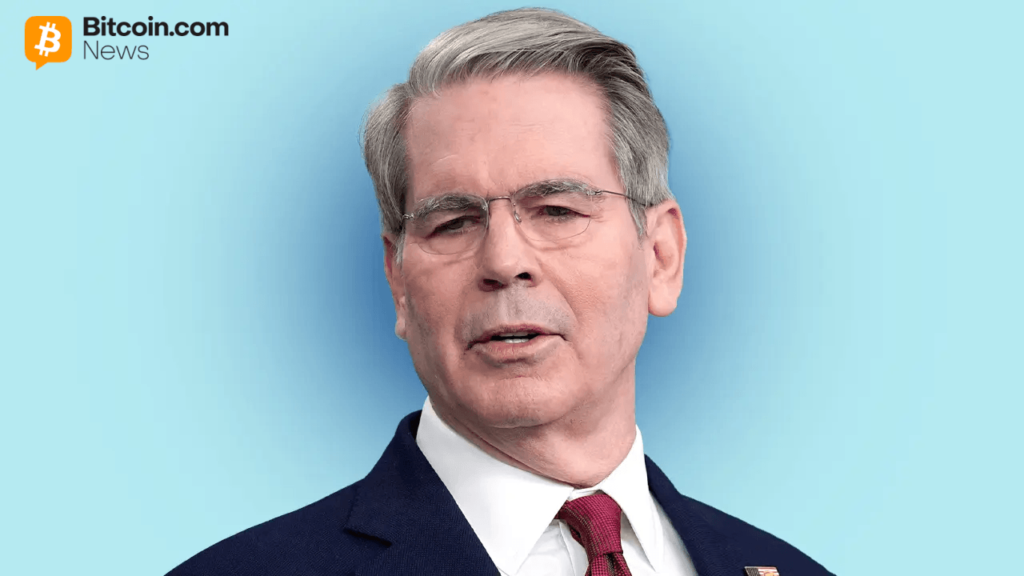
Bessent made the disclosure during a live interview with Fox Business host Larry Kudlow, framing the figure as a cumulative total built through Operation Economic Fury, a Treasury-led financial pressure campaign targeting Iran’s revenue streams, weapons funding, and sanctions evasion networks.
“I believe that we have seized about a billion dollars of their crypto,” Bessent told Kudlow. “Just outright grabbed the wallets. Some of them may be typing in right now and might not realize that their wallet has been grabbed.”
The billion-dollar threshold reflects months of escalating enforcement actions. By late April 2026, Treasury had already documented roughly $500 million in frozen assets, setting the stage for the updated total Bessent confirmed Friday.
One of the most documented single actions came on April 24, 2026, when stablecoin issuer Tether froze $344 million in USDT across two Tron blockchain addresses, specifically $213 million and $131 million linked to transaction patterns connected to Iran’s Islamic Revolutionary Guard Corps and the Central Bank of Iran. Blockchain analytics firm Chainalysis assisted in identifying the addresses, and the action aligned directly with updated OFAC designations published the same day.
Before the intensified campaign, Iran had reportedly been routing $400 million to $500 million per month through crypto, primarily USDT, to fund oil sales and IRGC operations. The Treasury’s Office of Foreign Assets Control (OFAC) has since sanctioned more than 1,000 Iran-linked entities and wallet addresses.
Operation Economic Fury, launched roughly in March 2025 under President Trump’s direction, spans far beyond crypto. The initiative includes freezing bank accounts, designating procurement networks, coordinating naval activity near the Strait of Hormuz, and working with European allies to seize properties tied to Iranian elites.
“This is money that’s stolen from the Iranian people,” Bessent noted Friday, referencing European villas and real estate being targeted alongside digital wallets. Assets are held pending potential future forfeitures, including claims by terrorism victims.
The financial campaign runs parallel to military operations that began at the end of February 2026, when U.S. and Israeli forces struck Iranian nuclear and military sites. A fragile ceasefire entered discussions, though Bessent made clear that economic pressure has not paused.
Bessent described Iran’s current financial condition in stark terms, citing hyperinflation above 200%, unpaid military and police personnel, food vouchers, internet shutdowns, and a collapsing rial. He added:
“They are at the end of their tether now financially.”
Iran has also explored crypto for new revenue streams. Plans to collect Strait of Hormuz tolls in bitcoin have circulated, along with a reported platform called Hormuz Safe, a bitcoin-based maritime insurance product with ties to the Revolutionary Guard. Those initiatives now face increased scrutiny as U.S. blockchain enforcement tightens.
Still, bitcoin is a far more powerful economic protest as BTC wallets cannot be frozen like the $344 million in tether ( USDT). For the broader crypto industry, the campaign signals that stablecoin issuers, exchanges, and blockchain infrastructure providers face growing compliance demands in geopolitical enforcement contexts.
Blockchain’s traceability, long considered a liability for privacy advocates, has become an enforcement asset for the Treasury. But the reality is, only for managed and controlled crypto assets that can be frozen via smart contracts.
Bessent indicated further designations and potential forfeitures are expected. Whether seized assets ultimately reach Iranian citizens or terrorism victims will depend on legal proceedings still ahead. Sanctions relief, Bessent stressed, remains conditional. “We’ll see,” he told Kudlow.