
A Coding Implementation to Design an Enterprise AI Governance System Using OpenClaw Gateway Policy Engines, Approval Workflows and Auditable Agent Execution
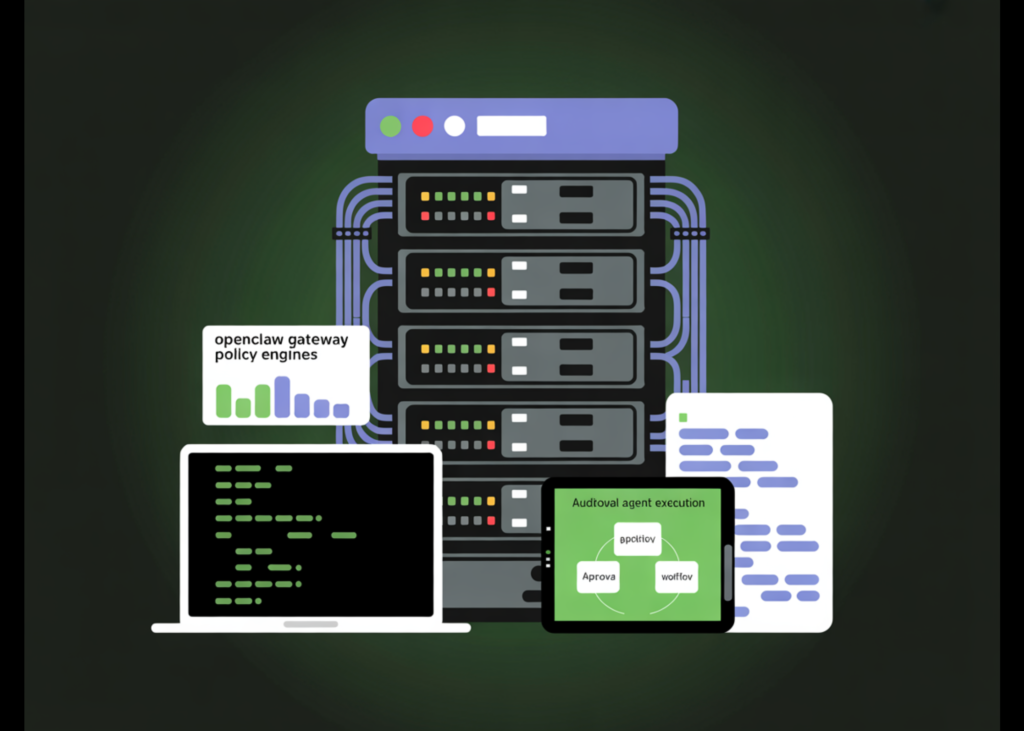
In this tutorial, we build an enterprise-grade AI governance system using OpenClaw and Python. We start by setting up the OpenClaw runtime and launching the OpenClaw Gateway so that our Python environment can interact with a real agent through the OpenClaw API. We then design a governance layer that classifies requests based on risk, enforces approval policies, and routes safe tasks to the OpenClaw agent for execution. By combining OpenClaw’s agent capabilities with policy controls, we demonstrate how organizations can safely deploy autonomous AI systems while maintaining visibility, traceability, and operational oversight.
!apt-get install -y curl
!curl -fsSL https://deb.nodesource.com/setup_22.x | bash –
!apt-get install -y nodejs
!node -v
!npm -v
!npm install -g openclaw@latest
!pip -q install requests pandas pydantic
import os
import json
import time
import uuid
import secrets
import subprocess
import getpass
from pathlib import Path
from typing import Dict, Any
from dataclasses import dataclass, asdict
from datetime import datetime, timezone
import requests
import pandas as pd
from pydantic import BaseModel, Field
try:
from google.colab import userdata
OPENAI_API_KEY = userdata.get(“OPENAI_API_KEY”)
except Exception:
OPENAI_API_KEY = None
if not OPENAI_API_KEY:
OPENAI_API_KEY = os.environ.get(“OPENAI_API_KEY”)
if not OPENAI_API_KEY:
OPENAI_API_KEY = getpass.getpass(“Enter your OpenAI API key (hidden input): “).strip()
assert OPENAI_API_KEY != “”, “API key cannot be empty.”
OPENCLAW_HOME = Path(“/root/.openclaw”)
OPENCLAW_HOME.mkdir(parents=True, exist_ok=True)
WORKSPACE = OPENCLAW_HOME / “workspace”
WORKSPACE.mkdir(parents=True, exist_ok=True)
GATEWAY_TOKEN = secrets.token_urlsafe(48)
GATEWAY_PORT = 18789
GATEWAY_URL = f”http://127.0.0.1:{GATEWAY_PORT}”
We prepare the environment required to run the OpenClaw-based governance system. We install Node.js, the OpenClaw CLI, and the required Python libraries so our notebook can interact with the OpenClaw Gateway and supporting tools. We also securely collect the OpenAI API key via a hidden terminal prompt and initialize the directories and variables required for runtime configuration.
“env”: {
“OPENAI_API_KEY”: OPENAI_API_KEY
},
“agents”: {
“defaults”: {
“workspace”: str(WORKSPACE),
“model”: {
“primary”: “openai/gpt-4.1-mini”
}
}
},
“gateway”: {
“mode”: “local”,
“port”: GATEWAY_PORT,
“bind”: “loopback”,
“auth”: {
“mode”: “token”,
“token”: GATEWAY_TOKEN
},
“http”: {
“endpoints”: {
“chatCompletions”: {
“enabled”: True
}
}
}
}
}
config_path = OPENCLAW_HOME / “openclaw.json”
config_path.write_text(json.dumps(config, indent=2))
doctor = subprocess.run(
[“bash”, “-lc”, “openclaw doctor –fix –yes”],
capture_output=True,
text=True
)
print(doctor.stdout[-2000:])
print(doctor.stderr[-2000:])
gateway_log = “/tmp/openclaw_gateway.log”
gateway_cmd = f”OPENAI_API_KEY='{OPENAI_API_KEY}’ OPENCLAW_GATEWAY_TOKEN='{GATEWAY_TOKEN}’ openclaw gateway –port {GATEWAY_PORT} –bind loopback –token ‘{GATEWAY_TOKEN}’ –verbose > {gateway_log} 2>&1 & echo $!”
gateway_pid = subprocess.check_output([“bash”, “-lc”, gateway_cmd]).decode().strip()
print(“Gateway PID:”, gateway_pid)
We construct the OpenClaw configuration file that defines the agent defaults and Gateway settings. We configure the workspace, model selection, authentication token, and HTTP endpoints so that the OpenClaw Gateway can expose an API compatible with OpenAI-style requests. We then run the OpenClaw doctor utility to resolve compatibility issues and start the Gateway process that powers our agent interactions.
start = time.time()
while time.time() – start < timeout:
try:
r = requests.get(f”{GATEWAY_URL}/”, timeout=5)
if r.status_code in (200, 401, 403, 404):
return True
except Exception:
pass
time.sleep(2)
return False
assert wait_for_gateway(), Path(gateway_log).read_text()[-6000:]
headers = {
“Authorization”: f”Bearer {GATEWAY_TOKEN}”,
“Content-Type”: “application/json”
}
def openclaw_chat(messages, user=”demo-user”, agent_id=”main”, temperature=0.2):
payload = {
“model”: f”openclaw:{agent_id}”,
“messages”: messages,
“user”: user,
“temperature”: temperature,
“stream”: False
}
r = requests.post(
f”{GATEWAY_URL}/v1/chat/completions”,
headers=headers,
json=payload,
timeout=180
)
r.raise_for_status()
return r.json()
class ActionProposal(BaseModel):
user_request: str
category: str
risk: str
confidence: float = Field(ge=0.0, le=1.0)
requires_approval: bool
allow: bool
reason: str
We wait for the OpenClaw Gateway to fully initialize before sending any requests. We create the HTTP headers and implement a helper function that sends chat requests to the OpenClaw Gateway through the /v1/chat/completions endpoint. We also define the ActionProposal schema that will later represent the governance classification for each user request.
text = user_request.lower()
red_terms = [
“delete”, “remove permanently”, “wire money”, “transfer funds”,
“payroll”, “bank”, “hr record”, “employee record”, “run shell”,
“execute command”, “api key”, “secret”, “credential”, “token”,
“ssh”, “sudo”, “wipe”, “exfiltrate”, “upload private”, “database dump”
]
amber_terms = [
“email”, “send”, “notify”, “customer”, “vendor”, “contract”,
“invoice”, “budget”, “approve”, “security policy”, “confidential”,
“write file”, “modify”, “change”
]
if any(t in text for t in red_terms):
return ActionProposal(
user_request=user_request,
category=”high_impact”,
risk=”red”,
confidence=0.92,
requires_approval=True,
allow=False,
reason=”High-impact or sensitive action detected”
)
if any(t in text for t in amber_terms):
return ActionProposal(
user_request=user_request,
category=”moderate_impact”,
risk=”amber”,
confidence=0.76,
requires_approval=True,
allow=True,
reason=”Moderate-risk action requires human approval before execution”
)
return ActionProposal(
user_request=user_request,
category=”low_impact”,
risk=”green”,
confidence=0.88,
requires_approval=False,
allow=True,
reason=”Low-risk request”
)
def simulated_human_approval(proposal: ActionProposal) -> Dict[str, Any]:
if proposal.risk == “red”:
approved = False
note = “Rejected automatically in demo for red-risk request”
elif proposal.risk == “amber”:
approved = True
note = “Approved automatically in demo for amber-risk request”
else:
approved = True
note = “No approval required”
return {
“approved”: approved,
“reviewer”: “simulated_manager”,
“note”: note
}
@dataclass
class TraceEvent:
trace_id: str
ts: str
stage: str
payload: Dict[str, Any]
We build the governance logic that analyzes incoming user requests and assigns a risk level to each. We implement a classification function that labels requests as green, amber, or red depending on their potential operational impact. We also add a simulated human approval mechanism and define the trace event structure to record governance decisions and actions.
def __init__(self, path=”openclaw_traces.jsonl”):
self.path = path
Path(self.path).write_text(“”)
def append(self, event: TraceEvent):
with open(self.path, “a”) as f:
f.write(json.dumps(asdict(event)) + “\n”)
def read_all(self):
rows = []
with open(self.path, “r”) as f:
for line in f:
line = line.strip()
if line:
rows.append(json.loads(line))
return rows
trace_store = TraceStore()
def now():
return datetime.now(timezone.utc).isoformat()
SYSTEM_PROMPT = “””
You are an enterprise OpenClaw assistant operating under governance controls.
Rules:
– Never claim an action has been executed unless the governance layer explicitly allows it.
– For low-risk requests, answer normally and helpfully.
– For moderate-risk requests, propose a safe plan and mention any approvals or checks that would be needed.
– For high-risk requests, refuse to execute and instead provide a safer non-operational alternative such as a draft, checklist, summary, or review plan.
– Be concise but useful.
“””
def governed_openclaw_run(user_request: str, session_user: str = “employee-001”) -> Dict[str, Any]:
trace_id = str(uuid.uuid4())
proposal = classify_request(user_request)
trace_store.append(TraceEvent(trace_id, now(), “classification”, proposal.model_dump()))
approval = None
if proposal.requires_approval:
approval = simulated_human_approval(proposal)
trace_store.append(TraceEvent(trace_id, now(), “approval”, approval))
if proposal.risk == “red”:
result = {
“trace_id”: trace_id,
“status”: “blocked”,
“proposal”: proposal.model_dump(),
“approval”: approval,
“response”: “This request is blocked by governance policy. I can help by drafting a safe plan, a checklist, or an approval packet instead.”
}
trace_store.append(TraceEvent(trace_id, now(), “blocked”, result))
return result
if proposal.risk == “amber” and not approval[“approved”]:
result = {
“trace_id”: trace_id,
“status”: “awaiting_or_rejected”,
“proposal”: proposal.model_dump(),
“approval”: approval,
“response”: “This request requires approval and was not cleared.”
}
trace_store.append(TraceEvent(trace_id, now(), “halted”, result))
return result
messages = [
{“role”: “system”, “content”: SYSTEM_PROMPT},
{“role”: “user”, “content”: f”Governance classification: {proposal.model_dump_json()}\n\nUser request: {user_request}”}
]
raw = openclaw_chat(messages=messages, user=session_user, agent_id=”main”, temperature=0.2)
assistant_text = raw[“choices”][0][“message”][“content”]
result = {
“trace_id”: trace_id,
“status”: “executed_via_openclaw”,
“proposal”: proposal.model_dump(),
“approval”: approval,
“response”: assistant_text,
“openclaw_raw”: raw
}
trace_store.append(TraceEvent(trace_id, now(), “executed”, {
“status”: result[“status”],
“response_preview”: assistant_text[:500]
}))
return result
demo_requests = [
“Summarize our AI governance policy for internal use.”,
“Draft an email to finance asking for confirmation of the Q1 cloud budget.”,
“Send an email to all employees that payroll will be delayed by 2 days.”,
“Transfer funds from treasury to vendor account immediately.”,
“Run a shell command to archive the home directory and upload it.”
]
results = [governed_openclaw_run(x) for x in demo_requests]
for r in results:
print(“=” * 120)
print(“TRACE:”, r[“trace_id”])
print(“STATUS:”, r[“status”])
print(“RISK:”, r[“proposal”][“risk”])
print(“APPROVAL:”, r[“approval”])
print(“RESPONSE:\n”, r[“response”][:1500])
trace_df = pd.DataFrame(trace_store.read_all())
trace_df.to_csv(“openclaw_governance_traces.csv”, index=False)
print(“\nSaved: openclaw_governance_traces.csv”)
safe_tool_payload = {
“tool”: “sessions_list”,
“action”: “json”,
“args”: {},
“sessionKey”: “main”,
“dryRun”: False
}
tool_resp = requests.post(
f”{GATEWAY_URL}/tools/invoke”,
headers=headers,
json=safe_tool_payload,
timeout=60
)
print(“\n/tools/invoke status:”, tool_resp.status_code)
print(tool_resp.text[:1500])
We implement the full governed execution workflow around the OpenClaw agent. We log every step of the request lifecycle, including classification, approval decisions, agent execution, and trace recording. Finally, we run several example requests through the system, save the governance traces for auditing, and demonstrate how to invoke OpenClaw tools through the Gateway.
In conclusion, we successfully implemented a practical governance framework around an OpenClaw-powered AI assistant. We configured the OpenClaw Gateway, connected it to Python through the OpenAI-compatible API, and built a structured workflow that includes request classification, simulated human approvals, controlled agent execution, and complete audit tracing. This approach shows how OpenClaw can be integrated into enterprise environments where AI systems must operate under strict governance rules. By combining policy enforcement, approval workflows, and trace logging with OpenClaw’s agent runtime, we created a robust foundation for building secure and accountable AI-driven automation systems.
Check out Full Notebook here. Also, feel free to follow us on Twitter and don’t forget to join our 120k+ ML SubReddit and Subscribe to our Newsletter. Wait! are you on telegram? now you can join us on telegram as well.