Mad Lads Holders Get Free $BP Airdrop — What’s It Worth?
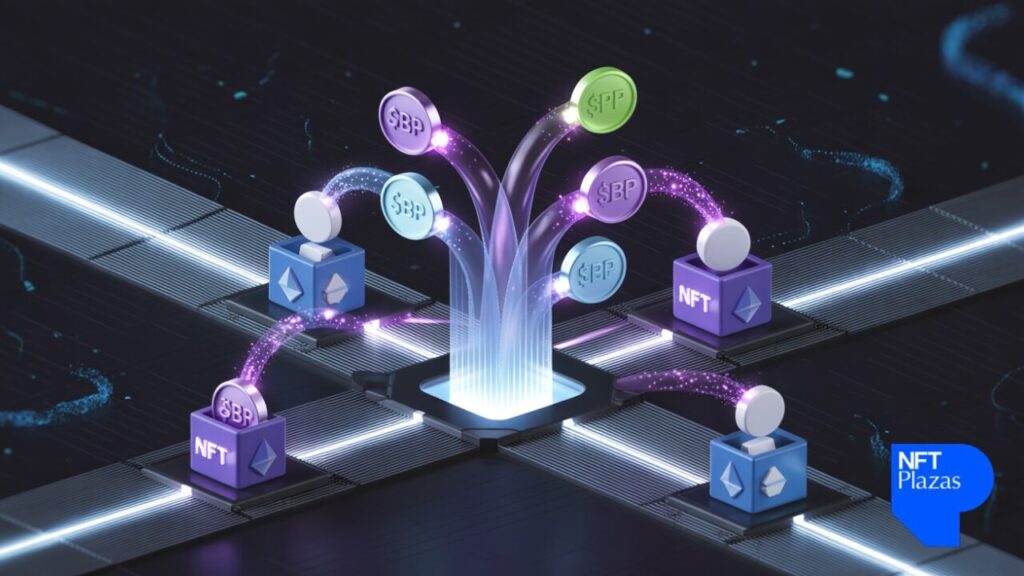
The long-anticipated launch of Backpack’s native token, $BP, has officially arrived – bringing with it one of the most closely watched airdrops in the Solana ecosystem. For holders of the Mad Lads NFT collection and active users of the Backpack Exchange, the event marks a major milestone. But as tokens begin circulating and valuations take shape, the market response has been anything but uniform.
From innovative tokenomics to polarizing community reactions, the $BP launch is quickly becoming a case study in how modern crypto projects balance decentralization, incentives, and user expectations.
A New Kind of Token Launch
Backpack, a fast-growing crypto ecosystem founded in 2022, has taken a notably unconventional route with its Token Generation Event (TGE). Rather than relying on traditional centralized exchange listings, the project launched $BP directly into the Solana DeFi ecosystem using Sunrise, a distribution platform developed by Wormhole.
This move is significant. It marks the first time a regulated crypto exchange has used on-chain infrastructure as its primary token distribution channel, bypassing the standard centralized listing model.
The benefits were immediate:
Instant liquidity via decentralized exchanges like Jupiter and MeteoraSeamless cross-chain compatibility through WormholeSimplified user experience, removing the need for manual bridging
This approach reflects a broader shift in crypto, where even regulated entities are beginning to embrace decentralized rails as core infrastructure rather than optional add-ons.

Backpack Exchange
Tokenomics Designed for Users
At the heart of the $BP launch is a token distribution model heavily tilted toward the community.
Key highlights include:
Total supply: 1 billion $BP62.5% allocated to users before exchange listing25% unlocked at TGE, fully distributed to users0% direct allocation to founders, team, or investors37.5% reserved for company treasury, locked for at least one year
This structure is intentionally designed to avoid one of crypto’s most criticized dynamics: insider token dumping.
Backpack founder Armani Ferrante emphasized that team members and investors will only gain exposure through company equity, not direct token allocations, aligning incentives with long-term company growth rather than short-term token price action.
Additionally, Backpack introduced a novel staking-for-equity mechanism, allowing users to lock $BP for one year or more in exchange for potential equity participation in the company. This effectively blurs the line between token holders and shareholders, an idea that could reshape how crypto projects approach ownership models.
The Airdrop: Who Got What?
The $BP airdrop was primarily distributed to two groups:
Points program participants (24%)Mad Lads NFT holders (1%)
The Backpack Points system rewarded users based on:
Trading volume (spot and futures)Asset holdingsReferralsOverall platform engagement
Frequent, consistent activity was key. Users who regularly traded, especially low-leverage strategies like 1-2x futures or SOL/USDC spot pairs, tended to accumulate more points and, consequently, larger allocations.
Meanwhile, Mad Lads holders received automatic allocations based on snapshot data, with no additional action required beyond connecting their wallets.
However, expectations didn’t always match reality.
Some NFT holders reported receiving around 1,000 $BP tokens, sparking disappointment given the perceived prestige of the Mad Lads collection.

$BP Token Airdrop
Controversy Around “Witch Hunting”
One of the most debated aspects of the airdrop has been Backpack’s aggressive anti-abuse measures.
In the lead-up to the TGE, the platform:
Conducted audits removing over 50 million “fake points”Required KYC verification for eligibilityEnforced manual verification steps before claims
Accounts suspected of “wash trading” or farming via multiple wallets were flagged, sometimes controversially labeled as “witches” and disqualified from rewards.
While these measures aim to ensure fairness, some users claim legitimate accounts were wrongly penalized. Social media has seen a surge in complaints, with users questioning the transparency of the filtering process.
So far, the team has not fully addressed these concerns, leaving a degree of uncertainty around how allocations were finalized.

Users question fairness as some legitimate accounts are reportedly penalized.
Market Reaction: Divided Sentiment
Despite strong fundamentals, the market response to $BP has been mixed.
On one hand:
The token launched with immediate liquidityThe fully diluted valuation (FDV) is estimated between $100M – $300MLarge investors have reportedly placed over $300M in directional bets
On the other hand:
Some “smart money” accounts are shorting the tokenCommunity dissatisfaction has dampened enthusiasmTrading volume across the ecosystem has dropped to a one-year low, according to CoinGecko data
Prediction markets suggest:
~87% probability of exceeding $200M FDVOnly ~44% probability of surpassing $300M FDV
This divergence highlights a broader tension: while the project’s structure is innovative, short-term sentiment is being driven by user experience and perceived fairness.

$BP price chart over the past 24 hours (updated on 24/03/2026)
A Strategic Bet on Long-Term Growth
Beyond the immediate airdrop, Backpack is positioning $BP as a long-term growth engine rather than a speculative asset.
The token is deeply integrated into the platform’s roadmap:
Fee reductions for active usersStaking rewards and USD-denominated earningsEquity conversion opportunitiesIncentives tied to global expansion milestones
Future token unlocks will be tied to real-world progress, including:
Regulatory approvalsEntry into new markets (EU, US, Japan)Product launches (stocks, prediction markets, payment cards)
This “milestone-based unlocking” model ensures that token supply expansion is directly linked to value creation – an approach rarely seen at this scale.
Backpack’s Bigger Picture
The $BP launch is just one part of Backpack’s broader ambition.
Since its founding, the company has built a vertically integrated ecosystem that includes:
A self-custodial walletA regulated centralized exchangeA blue-chip NFT collection (Mad Lads)
It has also:
Raised $37 million from major crypto investorsAcquired FTX EU for $32.7 millionExpanded regulatory coverage across multiple jurisdictions
Recent reports suggest Backpack is seeking an additional $50 million funding round at a $1 billion valuation, signaling strong institutional confidence.

Team behind Backpack
The Bigger Question: Support or Sell?
With the token now live, the key question is simple: Will the market support $BP, or move on?
The answer likely depends on three factors:
1. User Trust
Controversies around allocation fairness could impact long-term adoption if not addressed transparently.
2. Product Execution
Backpack’s ability to deliver on its roadmap, especially global expansion and new financial products, will determine whether $BP gains real utility.
3. Market Conditions
Launching during a broader crypto downturn adds pressure, but also creates an opportunity: projects that survive bear markets often emerge stronger.
Final Take
Backpack’s $BP launch represents one of the most ambitious and experimental token distributions in recent crypto history.
It combines:
User-first tokenomicsOn-chain distribution infrastructureEquity-like incentivesStrict anti-abuse mechanisms
The $BP token airdrop wasn’t just a distribution event – it was a stress test. Not of infrastructure, but of alignment. Traders, NFT holders, and long-term believers all entered with different assumptions, and the token is now sitting at the intersection of those expectations. What happens next won’t be decided by tokenomics charts, but by whether users keep showing up after the rewards are claimed.