
France Pushes Bill to Share Crypto Tax Data With 48 Nations
Key Takeaways
France introduced a bill to enact the CARF framework, sharing crypto users’ data with 48 countries.The bill accelerates data collection, sparking privacy concerns among French crypto holders.A tax official allegedly selling data fueled a rise in violent wrench attacks against crypto owners.
France Seeks Automatic Exchange of Crypto Data With New Bill
France is tightening its oversight over crypto users, seeking to gain a larger degree of control and visibility on crypto operations.
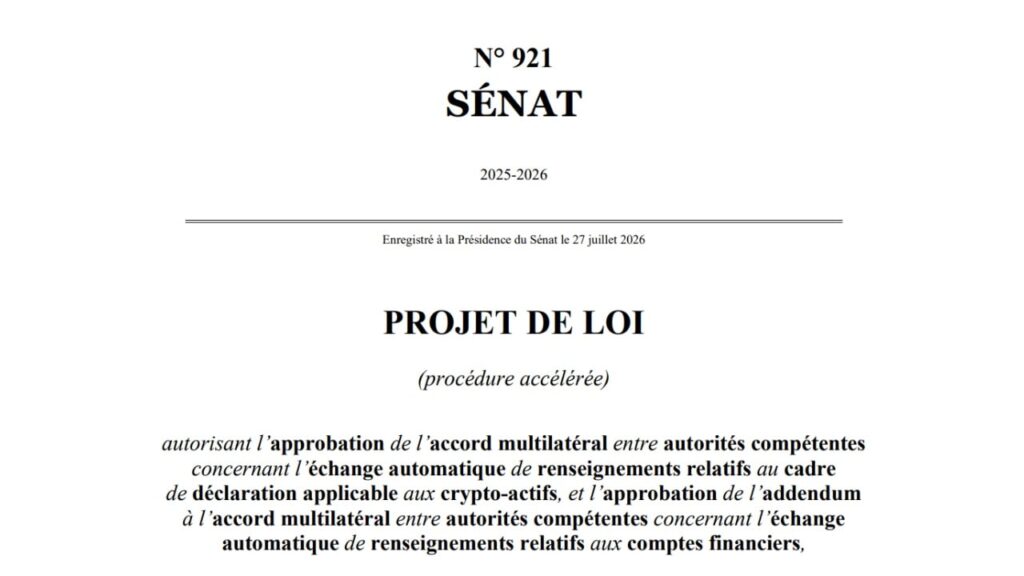
On July 17, Jean-Noël Barrot, the French Minister for Europe and Foreign Affairs, introduced text 921 in the Senate, seeking the implementation of a multilateral agreement to enable the automatic exchange of information as part of the Crypto-Asset Reporting Framework (CARF) developed by the Organization for Economic Co-operation and Development (OECD).
The bill seeks to enshrine the CARF framework as law in France, enabling the exchange of specific crypto information with 48 countries that also subscribed to the agreement signed in Paraguay in November 2024.
Data exchanged would include specific transactions, user names, addresses, tax identification numbers, residence, and the aggregate value transacted during the reporting period.
The bill would allow France to expand the automatic exchange of crypto info internationally, given that EU states are already preparing to exchange this data under the DAC-8 directive, which will become effective on September 30, 2027.
When approved, the data collection activities of the French state will accelerate in a context where most of the so-called “wrench attacks,” which include violence associated with cryptocurrency thefts, happen in France.
According to Chainalysis’ latest report, through 2026, French authorities have logged 30 publicly known incidents, but the institution recognizes that the actual number might be higher. The report explains that the surge in these incidents comes as a French tax official in the Paris area allegedly sold data on high-net-worth French crypto holders.
The rise of these incidents and the increasingly invasive data collection practices have alarmed French cryptocurrency holders, who are now being the target of kidnappings and homejacking.
A directive for crypto users to report their holdings in self-custody to tax authorities was dropped earlier this year. Deputies argued against it, as it would be unfeasible to check the veracity of these reports.