

Google Unveils a Clever Trick to Safeguard You From AI-Driven Phone Scams – Bitcoin News
Key Takeaways
Google launched Phone by Google on Pixel, using device handshakes to flag spoofed calls.FBI cited $893M in AI scam losses, raising pressure on carriers and regulators.Google plans broader RCS rollout; Android 12+ devices could gain verification next.
Scammers no longer need your phone to sound like you; AI can fake the number and the voice, too. Google is countering that with a Pixel-first update to its Phone app that quietly pings the other device to prove a call is real, then warns you when it is not. The stakes are high, with Americans losing $893 million to AI-driven schemes and Interpol pegging global ID fraud at over $400 billion. It also puts pressure on carriers and regulators that have stalled on caller verification, as Google prepares to extend the approach across Android using RCS.
Understanding the growing threat of phone scams
Phone scams are getting sharper as fraudsters tap AI to clone voices and spoof caller IDs. That mix makes a fake call from a “relative” sound painfully real. Americans lost $893 million to AI-linked schemes, according to the FBI, while global identity fraud is now pegged in the hundreds of billions. The result is a rising drumbeat of anxiety every time an unknown number lights up your screen.
Google’s new safeguard: Phone by Google
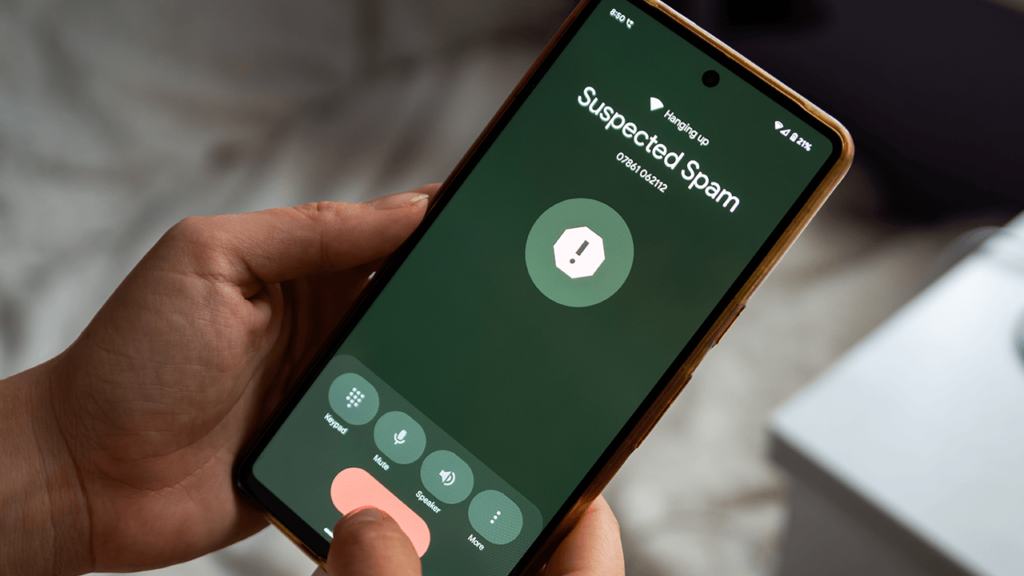
Google is rolling out a verification feature called Phone by Google, bundled with the latest Android update on Pixel devices. The idea is simple: when a known contact calls, the app performs a secure, behind-the-scenes handshake between both phones. If the handshake is missing or tampered with, your phone flags the call in real time and urges you to hang up.
Google describes a typical scenario like this: your mom calls, your phone pings hers, and the app confirms she is actually dialing you. If a scammer is spoofing her number and even mimicking her voice, there is no confirmation signal. Your device then checks your mom’s real phone. If it is idle, you get a clear on-screen warning.
Tackling AI’s role in scams
Voice cloning makes old-school phone fraud feel new and personal. The verification method targets that weakness directly, since it validates the device, not just the number or whatever voice comes through the speaker. For now, support is limited to Google’s own phones running Android 12 or newer. Broader availability will matter, because the tool works best when both ends participate.
Google says it built the feature on RCS, an open standard that carriers and other Android phone makers can implement. That could bring verified calling to more devices without extra setup. The company has not given a US-wide timeline for non-Pixel phones yet, but the technical path is clear.
The pathway to broader adoption
US carriers already deploy caller ID authentication frameworks, and the FCC’s push for standards like STIR/SHAKEN has made it harder to spoof at the network level. Still, criminals look for gaps. A handset-level handshake can complement those protections by validating the call origin on your device before you even say hello. Could this become the default across Android phones?
If RCS-based verification gains traction with major carriers and OEMs, adoption could accelerate. For users, the draw is straightforward: fewer fake calls from “family,” more confidence when the phone rings. For regulators and carriers, this adds another layer on top of existing defenses. Taken together, it is a measured step toward restoring trust in voice calls that many of us stopped answering.