
Bitcoin Gains Ground in MENA Region as Crypto Volume Triples to $350B
Key Takeaways
MENA crypto volume rose from $100B in 2022 to about $350B by 2025-2026, led by Turkey and the UAE.Bitcoin and stablecoins are gaining ground as hedges against war, inflation, and currency weakness.Gulf regulation and crisis-driven demand could further split MENA into two distinct crypto markets.
Turkey Leads MENA Crypto With $200B as Bitcoin Use Expands
Crypto activity across the Middle East and North Africa (MENA) has more than tripled in just a few years, turning geopolitical instability into an unexpected test of bitcoin’s role as a financial hedge.
Annual on-chain transaction volume across MENA rose from roughly $100 billion in 2022 to an estimated $350 billion by 2025–2026, according to the Bitcoin Policy Institute.
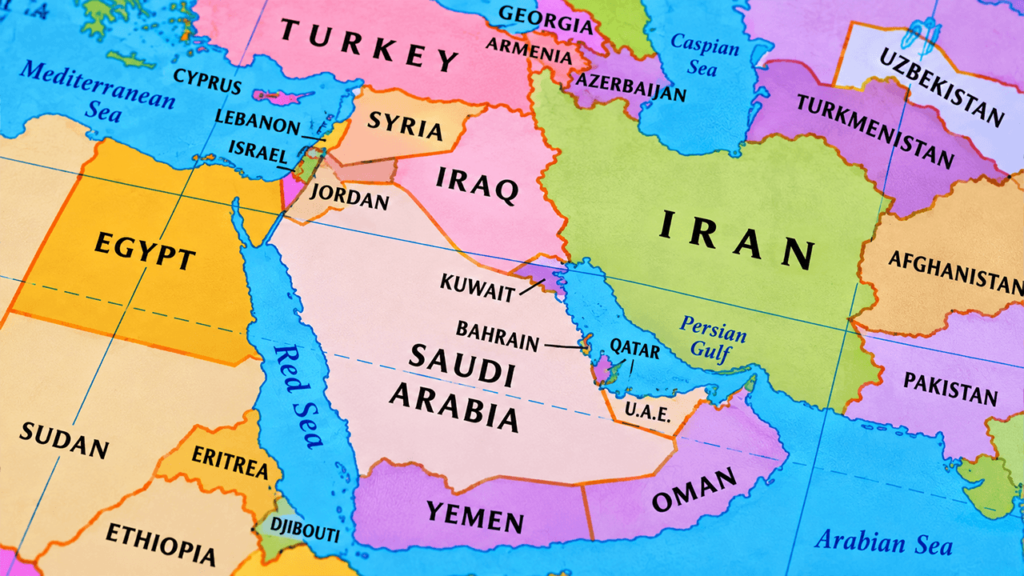
Turkey remains the region’s largest market, processing close to $200 billion annually. The United Arab Emirates handled about $150 billion in 2025, while Saudi Arabia recorded the fastest growth at 154% year over year. Qatar followed at 120%.
The numbers are significant because the region’s crypto expansion is no longer being driven by one type of user. In wealthier Gulf states, regulation and institutional participation are accelerating adoption. In economies facing sanctions, conflict or currency depreciation, bitcoin and dollar-backed stablecoins are increasingly being used to preserve value.
Iran Conflict Put Bitcoin’s Safe-Haven Narrative to the Test
The Israel-Iran conflict showed that bitcoin does not behave like a traditional haven immediately. After the first Israeli strikes in June 2025, the total crypto market lost about 3.7% within hours. Bitcoin fell roughly 2.3%, while ether dropped 7.5% as investors cut risk. But the market response changed as the conflict continued.
Capital rotated out of higher-risk altcoins and into bitcoin, pushing BTC dominance to 64.8%, its highest level at the time. That pattern matters. Rather than investors abandoning crypto entirely, a larger share of capital moved toward bitcoin as concerns grew around oil prices, inflation, and the Strait of Hormuz.
This pointed to the operational resilience of digital assets during regional conflict, with crypto exchanges continuing to function even when conventional stock exchanges were closed.
Two Different Crypto Markets Are Emerging in MENA
MENA is increasingly splitting into two adoption stories.
In Egypt, Turkey, Lebanon and Iran, currency weakness has encouraged demand for bitcoin and U.S. dollar stablecoins. Peer-to-peer bitcoin trading in Egypt rose more than 300% following successive devaluations of the Egyptian pound.
The Gulf is moving for different reasons.
The UAE, Bahrain, Saudi Arabia and Qatar are building regulated digital-asset markets as part of wider economic diversification programs. In the UAE, bitcoin accounts for about 38% of crypto trading activity, ahead of ether at 22%, while dollar-backed stablecoins represent roughly 30%.
The takeaway is increasingly difficult to ignore: geopolitical shocks may still hurt bitcoin initially, but in MENA they are also strengthening the case for crypto as portable, continuously traded financial infrastructure.
For investors living with war, inflation, or currency risk, that distinction is becoming more than theoretical.