
Bitcoin Holders Face Violent Attacks—How to Stay Safe as BTC Price Soars

Key Takeaways
A new map tracks reported crypto asset-related physical attacks across countries, with France leading.Data leaks and mandatory information sharing is another major threat.Bitcoin price rallies could increase physical security risks for BTC holders.
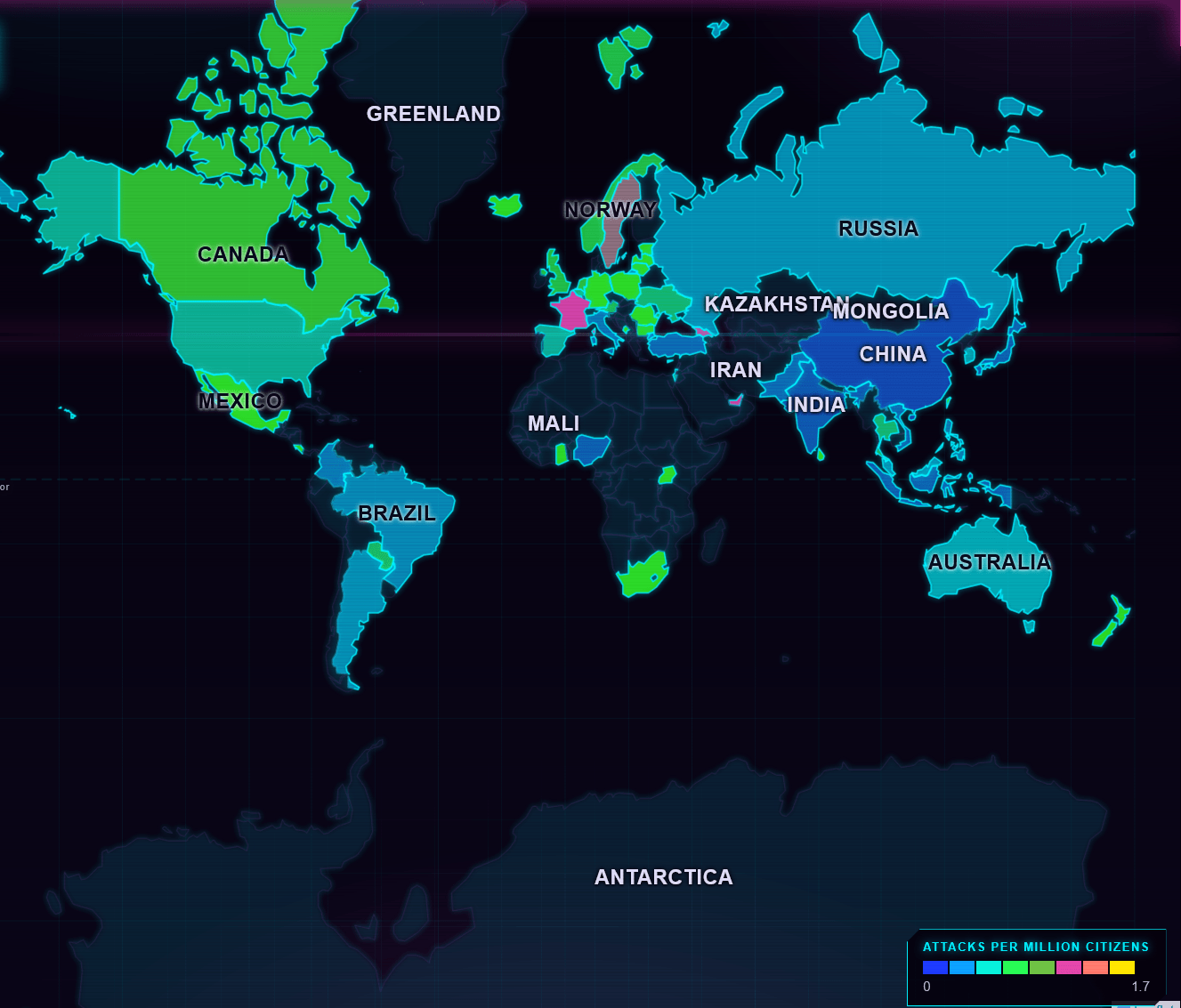
Jameson Lopp, co-founder and chief security officer of Casa, a bitcoin self-custody services firm, launched an interactive map on Sept. 21 based on his database of publicly disclosed attacks on crypto owners since 2014.
According to the data, France has recorded 68 crypto-related attacks in total, while the U.S. had 59 and the U.K. had 24, ranking second and third, respectively. Meanwhile, when measured by attacks per capita, Hong Kong—while not an independent country—has the highest rate, with 1.72 attacks per million people.
Georgia ranks second, but most of the attacks occurred in the Russian-occupied part of the country. France ranks fourth, with 1.02 attacks per million people, behind the United Arab Emirates. However, when measured by attacks per capita this year, France leads again, becoming more dangerous than Hong Kong.
The Problem Could Be Even Worse
However, this data is incomplete, as many attacks remain unreported. A separate database maintained by Gart, a personal security services company for crypto asset holders, recorded 391 attacks in 59 countries in total. That is almost 9% more attacks than seen in Lopp’s database.
Lopp’s database also shows that the number of attacks in France almost tripled in the first nine months of 2026 compared with the same period in 2025, reaching 41. In the rest of the world, the number, which represents real people, fell by more than half to 21.
French Interior Minister Laurent Nuñez said in late June that authorities counted 77 crypto asset-related attacks in the first half of 2026, highlighting that the situation might be even worse than the tracked numbers suggest.
Correlation With Bitcoin Price
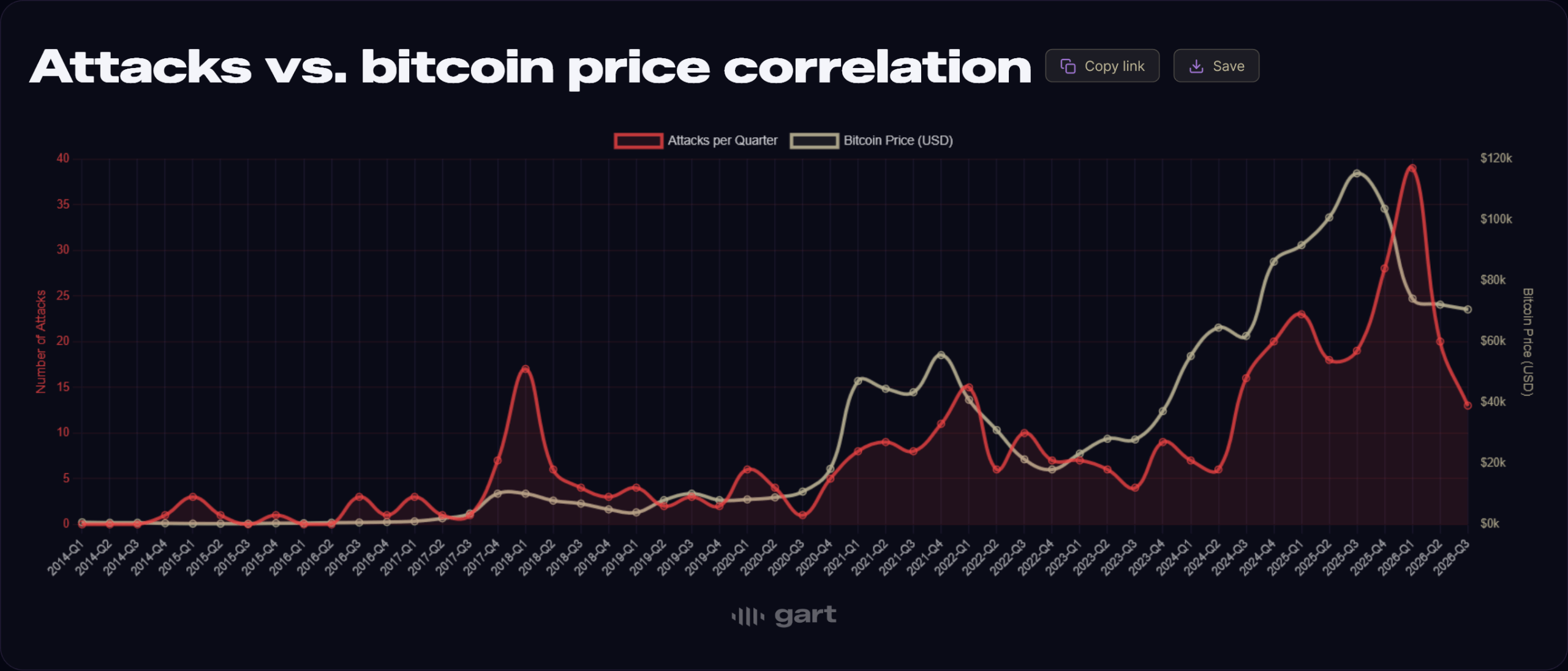
Gart’s graph also shows that the number of attacks dropped in the second quarter of this year compared with the first quarter, and continued to decline in the third quarter as September neared its end.
However, the graph also shows that attacks correlate with the price of bitcoin with varying degrees of delay. This suggests that if history repeats itself, bitcoiners could be targeted more often again if the rally continues. So far in the third quarter of 2026, the bitcoin price has already jumped around 45%.
In the meantime, at least some bitcoiners are now more aware of these risks and have improved their security.
Chainalysis found that through late June 2026, 26% of attacks had resulted in payments, compared with 67% in 2024. However, analysts said this was partly because a French citizen data leak widened the pool of possible victims, increasing the number of attacks while their “success rate” dropped.
Unfortunately, the physical security of a crypto asset owner also depends on third parties, such as exchanges and governments that hold sensitive personal data.
Home Invasions on the Rise
The wave of attacks in France has allegedly also been facilitated by the 2024 sale of crypto asset owner data by a local tax official, who admitted to the crime, plus other related data breaches disclosed in 2026.
This likely contributed to home invasions and kidnappings becoming the two most popular attack types, accounting for 45% of total cases, according to Gart. Chainalysis data shows that home invasions accounted for 37% of incidents this year, up from 14% in 2025.
Even people merely believed to own crypto assets are being targeted at home, highlighting the dangers of personal data leaks. For example, in France, criminals mistakenly targeted one couple three times after discovering that the property belonged to a crypto asset owner.
Bitcoin.com News also reported this week that a French data leak sparked a surge in fake crypto support calls. Also this month, armed men tied up a family in another crypto asset-related home invasion in France.
Governments Create More Risks for Bitcoin Holders
In its first-half 2026 wrench attacks report, crypto asset security firm Certik concluded that while criminals once looked for victims on social media and at conferences, they can now build “target packages” using leaked databases, tax and compliance records, exchange customer data, public wallet activity, property records and phone data.
As Certik summarized, “Data minimization is no longer a privacy luxury. It is a physical safety control.”
Achieving this control could become even more difficult as global authorities attempt to close crypto asset-related tax reporting gaps. Exchanges are now being forced not only to collect customer data but also to share it with other jurisdictions, increasing the risk of data leaks.
For example, at least 46 jurisdictions have already committed to implementing the Crypto-Asset Reporting Framework (CARF), and sharing crypto asset user information with other jurisdictions in 2027. Another 27 jurisdictions are expected join the group in 2028, while the U.S. will join in 2029. Ultimately, 26 of the 46 committed jurisdictions are in the EU.
Therefore, your security might also depend in part on when these policies are implemented and how well your data is protected.
The track record is not encouraging. Global law firm DLA Piper claims that data from Europe’s data protection supervisory bodies shows that there were 443 personal data breach notifications per day on average in 2025, or 22% more than a year earlier. New notification laws might also have contributed to this increase. In either case, according to IBM data, personal customer information is leaked in about 53% of all data breaches.
How to Strengthen Your Family’s Safety
While it is impossible to manage certain external factors that affect your security, such as government policies or an exchange’s security practices, you can still take measures to increase your safety.
Below are recommendations from Certik on how you can protect yourself and your family and reduce potential losses in the event of an attack:
Limit doxxing: Avoid sharing wallet addresses, portfolio screenshots, home details, travel plans, conference routines, or signs of wealth linked to your crypto identity. Separate wallets: Keep only small amounts in everyday wallets. Store long-term holdings in secure vaults that cannot be moved instantly. Separate backup materials: Keep hardware wallets and seed phrases apart. Avoid storing valuable recovery materials at home. Use multi-party controls: For large holdings, use multisig or MPC setups so no single person can move all the funds under pressure. Add withdrawal delays: Use time locks, spending limits, allowlists, and staged vaults to make forced withdrawals harder. Have a family plan: Set emergency code words, trusted contacts, check-in routines, and clear steps for dealing with suspicious visitors or deliveries. Secure your home: Use cameras, intercom verification, delivery procedures, alarms, and coordination with trusted neighbors.
Stay safe.