
Circle’s EURC wallet share grows over 6x from January 2025 to March 2026
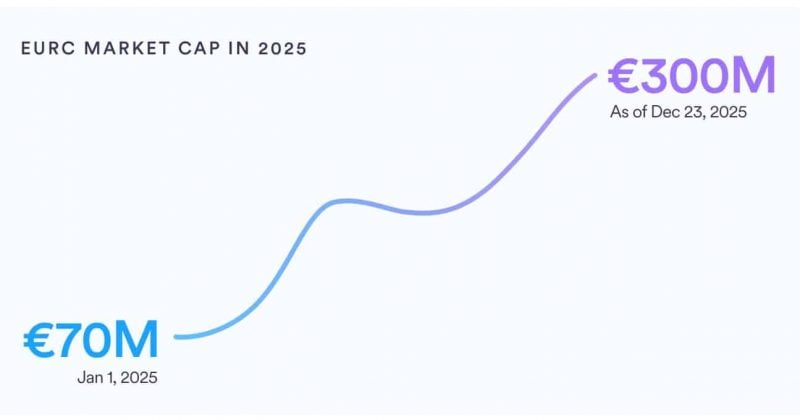
Sometimes the best product strategy is just being the last one standing when regulators finish clearing the room. That’s more or less what happened with Circle’s EURC, the euro-denominated stablecoin that has seen its wallet share expand more than six times between January 2025 and March 2026.
The token’s market cap hit approximately $460.8M by March 1, 2026, giving it over 50% of the entire euro stablecoin market.
MiCA did the heavy lifting
The EU’s Markets in Crypto-Assets regulation, known as MiCA, created a compliance framework that proved too steep for many competitors. Most notably, Tether’s euro-denominated products were forced off numerous EU exchanges, effectively handing Circle the keys to the market.
Circle operates under a single French Electronic Money Institution license that is valid across all 27 EU member states, giving the company a regulatory passport that competitors either can’t match or haven’t bothered to pursue.
EURC’s circulating supply tripled from roughly 309 million tokens at the end of 2025 to about 390 million in early 2026. That’s a 23.6% jump in just three months.
From DeFi rails to checkout counters
Ingenico, one of the world’s largest payment terminal manufacturers, has integrated EURC into its infrastructure. That means the stablecoin can now be spent at over 40 million global POS terminals.
A survey found that 58% of European institutions are incorporating stablecoins into their payment systems.
What the six-fold wallet growth actually tells us
Wallet share tells you how many unique holders exist relative to the broader market. A six-fold increase in wallet share means EURC isn’t just attracting bigger deposits from the same whales. It’s reaching new users at a pace that dramatically outstrips the rest of the euro stablecoin field.
The supply tripling while wallet share grew six-fold suggests organic, grassroots-level adoption alongside big institutional inflows.
MiCA licenses aren’t exclusive, and competitors will eventually navigate the regulatory process. Tether has not signaled it’s giving up on Europe, and other issuers could emerge with their own EMI licenses.