
CLARITY Act Leaves 5 Loopholes, From Pensions to Trump’s $1.4B Crypto
Key Takeaways
Staff say the bill would not stop Trump’s next $1.4 billion in crypto profits.Investor advocates and five major labor groups warn of securities-law gaps.A cloture vote on the motion to proceed is set for Sept. 15.
Minority Staff Fault the Bill on Five Counts
The Minority Staff of the Senate Banking, Housing, and Urban Affairs Committee, led by ranking member U.S. Senator Elizabeth Warren (D-MA), reviewed the July 22 text of the Digital Asset Market Clarity Act. The result was an Aug. 5 analysis identifying five major loopholes in the CLARITY Act.
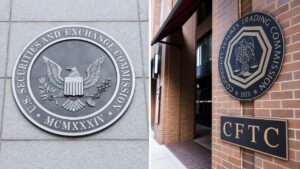
The CLARITY Act, H.R. 3633, is digital asset market structure legislation that draws jurisdictional lines between the Securities and Exchange Commission (SEC) and Commodity Futures Trading Commission (CFTC). Staff set out five things they believe a crypto framework must do at minimum: protect pensions from securities-law gaps, block illicit finance, shield taxpayers from bailouts, stop presidential self-dealing, and preserve consumer protections. The bill, according to the analysis, misses all five.
Senate Banking Committee majority staff contend the legislation strengthens investor protections, establishes federal oversight, and targets fraud and money laundering.
Pensions, Fraud, and the Right to Sue
A two-tiered system would let assets offered on a blockchain escape the authority of the SEC, staff contend. Companies issuing crypto could self-certify their exemption from securities requirements. Staff say that would remove disclosure and supervision tools available to the SEC and state regulators to safeguard investors.
That fact sheet names six organizations among those raising pension-related concerns, including Healthy Markets, an investor advocacy group counting pension funds and financial firms among its members. Five labor organizations are also named: the American Federation of Labor and Congress of Industrial Organizations (AFL-CIO), the American Federation of State, County and Municipal Employees (AFSCME), the Service Employees International Union (SEIU), the National Education Association (NEA), and the American Federation of Teachers (AFT).
Remedies narrow sharply under the fifth standard, which covers what happens after an investor is defrauded. Carving assets out of securities laws would weaken SEC antifraud enforcement, staff argue. State and tribal authorities could also be stripped of authority to enforce their own securities, consumer protection, and gaming laws. Staff also contend the bill fails to establish an enforceable private right of action and does not address the use of forced arbitration in crypto disputes.
Cartels, Sanctions, and Bank Deposits
Businesses tied to decentralized finance (DeFi) platforms would be exempt from counter-illicit finance duties even when earning millions from platform transactions, according to the minority staff CLARITY Act fact sheet. Minority staff’s document cites a 2023 Treasury Department warning linking DeFi services to ransomware operators, thieves, and drug traffickers. Some crypto mixers would also stay outside U.S. sanctions through what staff call the Tornado Cash loophole, a statutory gap a court found only Congress can repair.
Stablecoin yield draws the third objection. The Independent Community Bankers of America (ICBA) and the Conference of State Bank Supervisors (CSBS) caution that interest payments would pull deposits from community banks, tightening small business credit. Banks would meanwhile gain latitude to lend against crypto collateral, hold crypto directly, and trade derivatives using customer deposits and the federal safety net. The Systemic Risk Council, a nonpartisan body of former regulators, has identified those activities as a potential bailout risk.
Trump Family Profits and an Uncertain Vote
President Trump made more than $1.4 billion from cryptocurrency ventures in 2025 alone, nearly two-thirds of his total income, according to Senate Banking Committee minority staff. Enforcement would rest solely with his attorney general, while state attorneys general would face a categorical bar on suing. The obligations would also expire when Trump leaves office. Warren and U.S. Senator Richard Blumenthal (D-CT) separately demanded an SEC probe into the Trump memecoin after citing $3.8 billion in investor losses.
Industry leaders say the legislation would bring crypto activity under U.S. supervision rather than driving it offshore. Crypto exchange Coinbase (Nasdaq: COIN) CEO Brian Armstrong characterized the bill as bipartisan work and urged the Senate to pass the CLARITY Act. The bill now heads toward a Sept. 15 Senate cloture vote on the motion to proceed. Majority Leader John Thune (R-SD) filed the motion just before the Senate’s August recess, and the bill still needs 60 votes to advance.