
Community Clashes Over Strategy’s First Bitcoin Sale in 4 Years as MSTR Craters 7%

Key Takeaways
Strategy sold 32 bitcoin for $2.5 million between May 26 and May 31, its first disclosed sale since December 2022.MSTR shares dropped roughly 6% to around $150 and bitcoin fell below $65,000 days after the June 1 filing, triggering billions in crypto liquidations.Crypto analysts and X commentators split sharply on whether the sale signals routine treasury management or the first crack in Saylor’s accumulation machine.
Forty-One Months of Holding, Then This
The filing, signed by Executive Vice President and General Counsel Thomas C. Chow, confirms the sale averaged $77,135 per coin. Proceeds are earmarked for distributions on the company’s STRC perpetual preferred stock, known as Stretch. Strategy still held 843,706 bitcoin as of May 31 at a blended average purchase price of $75,699, meaning the coins moved above the company’s cost basis.
The numbers are small. The reaction was not.
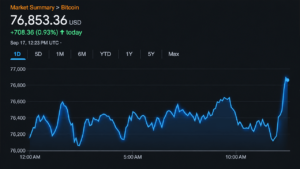
MSTR shares fell roughly 7% today, recently trading near $126, down more than 15% this week. Bitcoin dropped below $71,500 on Monday, pulled lower by the announcement alongside Iran’s decision to halt talks with the U.S. The filing triggered billions in crypto liquidations. It was a textbook sell-the-headline reaction, emotional and fast, disconnected from the actual numbers. By Wednesday, bitcoin was in panic mode as bears brought the price down below $65,000.
The 32 coins represent 0.0038% of Strategy’s holdings. In the same week, the company raised $128.3 million through its at-the-market (ATM) common stock program, dwarfing the bitcoin sale by a factor of fifty. Strategy’s USD Reserve stood at $900 million as of May 31, drawn down from $2.2 billion earlier in 2026.
Chess, Not Capitulation
The crypto community was not focused on the size. It was focused on what the sale means going forward, and it split quickly into two camps.
One side read the disposal as financial housekeeping. “Rating agencies need to see capital available to cover dividend obligations,” one crypto influencer wrote on X. “If Saylor refused to sell any bitcoin, those agencies may not recognize the bitcoin stack as usable capital. So Strategy sold a tiny amount to prove liquidity.”
The X account added:
“They still hold 843,706 bitcoin. Think of this more like financial housekeeping than a change in conviction.”
Another X user put it plainly: “If Saylor truly wanted out or expected a massive collapse, he wouldn’t be selling 32 BTC. He would be unloading size.” A third voice framed the move as precedent rather than size. “The market panic is about precedent: ‘never sell’ became ‘sell when the machine needs cash.’ 32 BTC is tiny, but the why is huge: the treasury machine needed cash and chose coins over dilution. That’s not capitulation, it’s leverage asking for lunch.”
First It’s 32. Then What?
It’s fair to say the Strategy sale, announced Monday, has dominated discussion throughout the week. Many have pointed to it as the primary catalyst behind BTC’s latest decline, even though BTC had already been trending lower before the news began circulating shortly after 8 a.m. EDT on June 1.
Another camp on social media saw something more structural. One widely circulated post laid out the mechanics in detail. Strategy’s premium to net asset value, which once reached 2.4 times, has collapsed to 1.0 times. At that level, issuing equity no longer functions as a free accumulation lever. “So they turned on the second pump: STRC preferreds at 11.5%. Now they need real cash every quarter to pay those dividends. And today, for the first time, part of that cash came from selling bitcoin.” The X post went further: “This isn’t treasury management. This is keeping the pyramid alive by eating the reserves.”
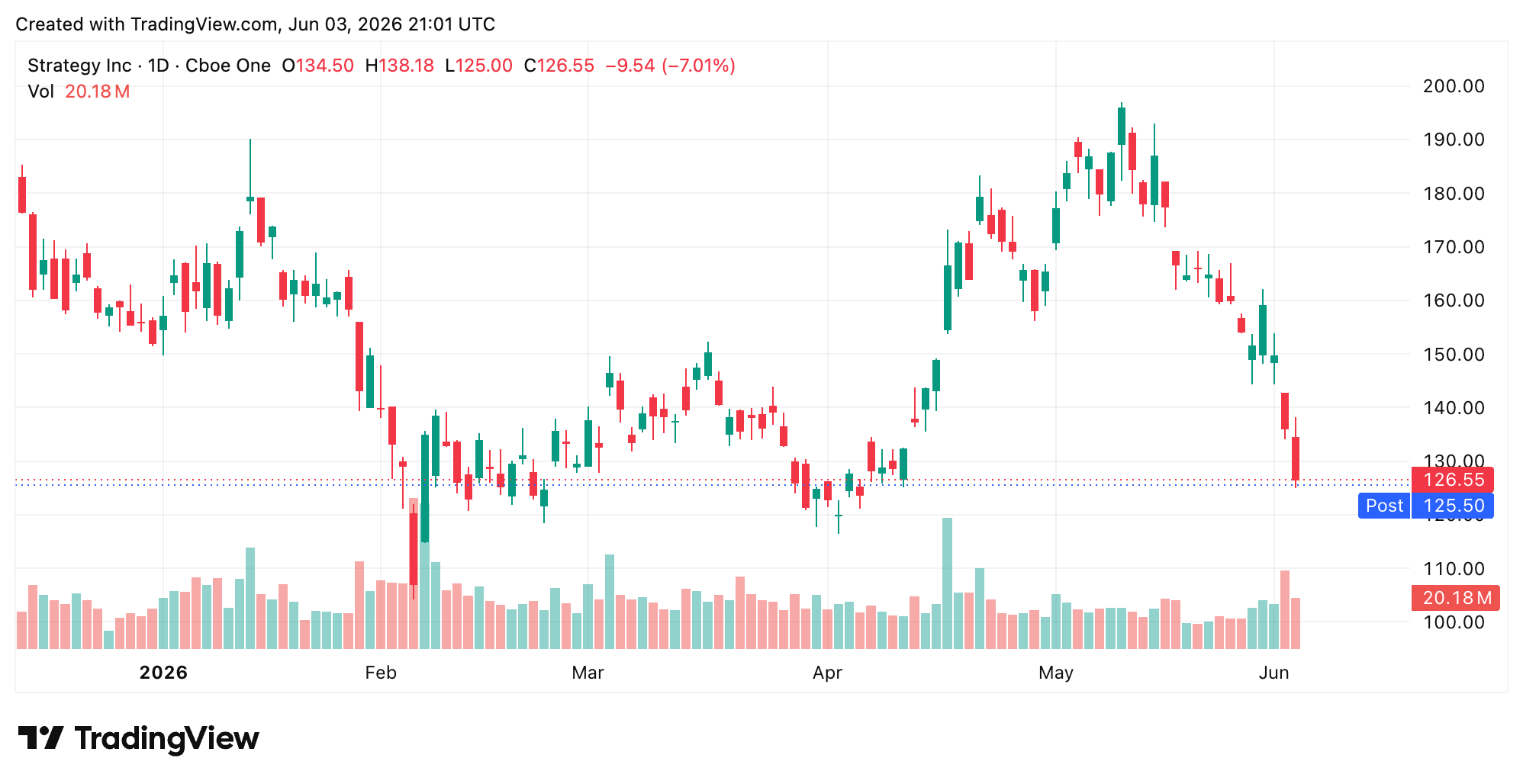
The STRC structure itself is under pressure. STRC was designed to hold near $100. It has since dropped to $94.84. “Three things hit at the same time,” one X commenter wrote. “ Bitcoin dumped toward $67K, Strategy sold bitcoin for the first time in 4 years, and investors are now questioning how sustainable the dividends really are.” Markets are pricing in the possibility that Strategy may eventually need to sell more bitcoin to support nearly $1.7 billion in yearly preferred dividend obligations, the X user Bull Theory detailed.
Strive is now offering 13% on a competing product, while Strategy has held the STRC dividend flat at 11.5% for four straight months, Bull Theory’s X post notes.
The Goal: ‘Make STRC the Best Credit Instrument in the World’
Not everyone read the sale as a warning sign. One contrarian post argued it was the first responsible move Strategy has made. “Real treasury management requires selling. Strategy runs four preferred stock series, perpetual dividends, convertible notes with hard maturity dates. All of it needs cash constantly. Paying debt with new debt has a name. It’s called a death spiral. So today’s 32 BTC sale is a step forward. A mature one. First sign Strategy might actually survive long-term.”
Saylor himself had telegraphed the move. During Q1 2026 earnings, he told investors the company would “probably sell some bitcoin to pay a dividend just to inoculate the market and send the message that we did it.” After the filing dropped, his first public comment on X focused not on the sale but on the product it funded: “Our goal is to make STRC the best credit instrument in the world.”
Strategy holds more than $63 billion in bitcoin across 843,706 coins. Whether 32 of them matter depends entirely on what comes next.