

Crypto Market Crash Wipes Out $560B in Two Months: Bitcoin Fall

The crypto market has lost roughly $560 billion since September 22, wiping out nearly 20% of its value. The sell-off has now spread from U.S. stocks into crypto, with the Nasdaq crash and Jensen Huang’s resignation from Nvidia triggering Nvidia shares to fall 8%.
Meanwhile, Bitcoin dropped below $72,000 as crypto liquidations hit $750 million in 24 hours.
Why Has the Crypto Market Lost $560 Billion?
The total crypto market cap has fallen from around $3.04 trillion on September 22 to nearly $2.48 trillion as several factors have put pressure on the market.
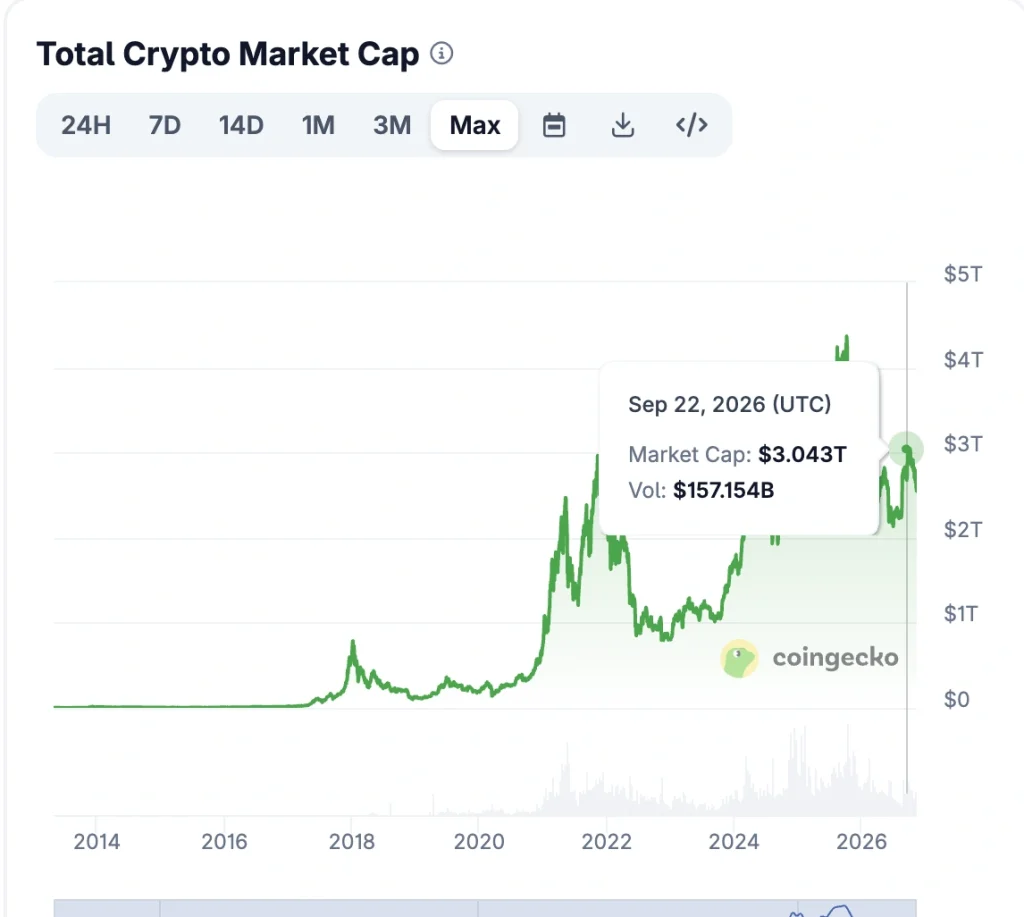
The latest sell-off picked up on November 12 after Jensen Huang resigned as Nvidia CEO following an internal investigation into two alleged affairs. One involved an executive suspected by U.S. intelligence of being a Chinese spy. The news triggered an 8% drop in Nvidia shares and other AI-linked stocks. Colette Kress is set to replace Huang as interim CEO.

U.S. stocks have also added to the pressure. On November 5, the Nasdaq-100 dropped 8%, while major crypto indexes fell 5.25%. Weakness in technology and AI stocks also spread to crypto-linked companies and Bitcoin miners.
Bitcoin then fell below $76,000 as October inflation came in at 0.4%, above the 0.3% forecast. This raised expectations of a 25-basis-point Fed rate hike in December, putting further pressure on crypto prices.
The selling had already picked up in October after oil prices jumped above $111 a barrel following attacks on tankers near the Strait of Hormuz.
Earlier, on September 24, the U.S. 10-year Treasury yield reached its highest level since 2007. This made safer investments more attractive and put further pressure on crypto.
Bitcoin Has Lost Its September Gain
Bitcoin has fallen from a mid-September high of $87,395 to below $71,635, losing nearly 18% during the slide.
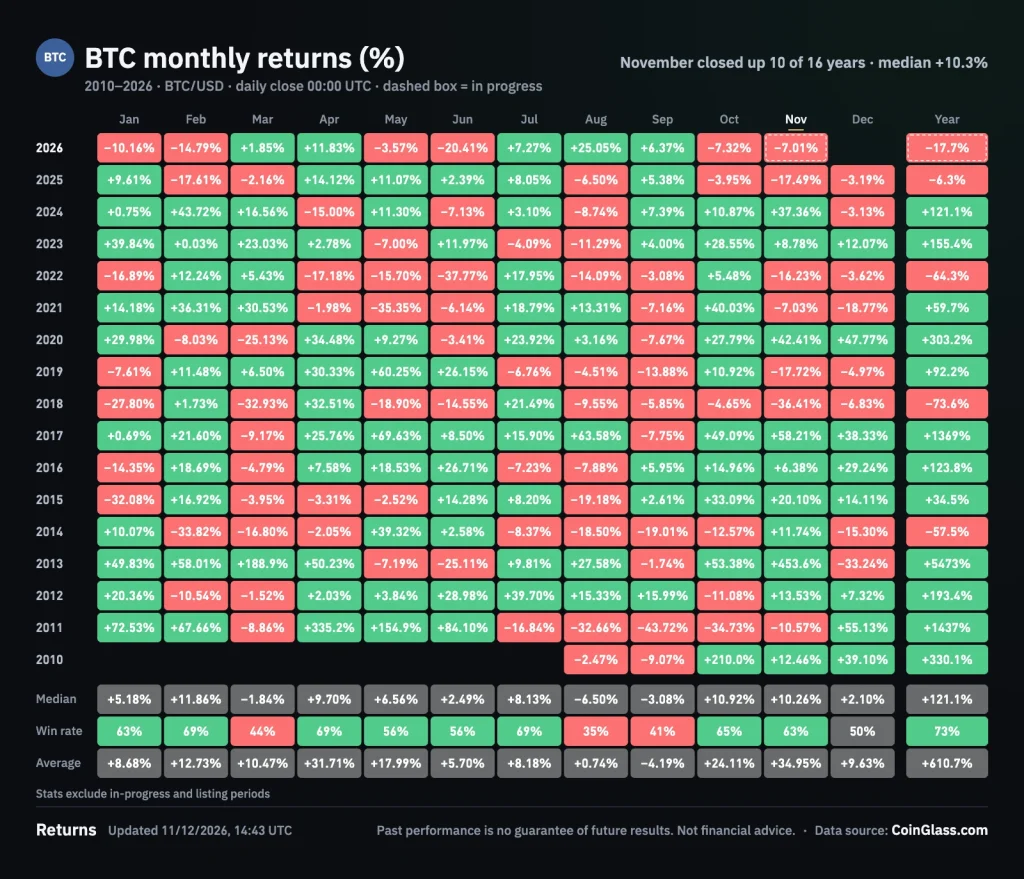
The monthly returns also show a pattern worth watching. In 2025, BTC fell 4% in October, 17% in November, and 3% in December. This year, October already ended with a 7% loss. If the 2025 pattern repeats, November could see a total decline of around 20%, followed by a smaller 6–7% drop in December.
The selling has also reached retail investors. Bitcoin has lost about 108,700 non-empty wallets since reaching 59.99 million in October, while the Coinbase Premium remains negative, pointing to weaker U.S. buying demand.
Institutional demand has also weakened. U.S. spot Bitcoin ETFs recorded roughly $2.4 billion in net outflow across October and early November, removing an important source of buying pressure. Even Strategy, the largest corporate holder of Bitcoin, has slowed its BTC purchases.
Large-Cap Altcoins Are Falling Even Faster
The damage has spread beyond Bitcoin. Ethereum has fallen 16% this week and slipped below $2,000. XRP has dropped 22% to around $1, while Solana is down 15%.
Chainlink, Cardano, and Zcash have also posted weekly losses between 15% and 26%.
With major altcoins falling faster than Bitcoin, the market’s $560 billion loss shows how quickly selling pressure has spread across crypto.
Was this writing helpful?
Story Ends Here
Trust with CoinPedia:
CoinPedia has been delivering accurate and timely cryptocurrency and blockchain updates since 2017. All content is created by our expert panel of analysts and journalists, following strict Editorial Guidelines based on E-E-A-T (Experience, Expertise, Authoritativeness, Trustworthiness). Every article is fact-checked against reputable sources to ensure accuracy, transparency, and reliability. Our review policy guarantees unbiased evaluations when recommending exchanges, platforms, or tools. We strive to provide timely updates about everything crypto & blockchain, right from startups to industry majors.
Investment Disclaimer:
All opinions and insights shared represent the author’s own views on current market conditions. Please do your own research before making investment decisions. Neither the writer nor the publication assumes responsibility for your financial choices.
Sponsored and Advertisements:
Sponsored content and affiliate links may appear on our site. Advertisements are marked clearly, and our editorial content remains entirely independent from our ad partners.
Read the Next News