
Crypto Reckoning? US Banks Urge Stricter AML And Sanctions Rules–Industry Pushes Back
A renewed push to tighten anti–money laundering (AML) and sanctions requirements in the United States has sparked a fresh debate between traditional banking advocates and crypto policy leaders.
The latest round of attention comes from the Washington, DC-based Bank Policy Institute (BPI), which released a new report titled “Time for a Reckoning on AML and Crypto.”
BPI Calls For US AML And Sanctions Overhaul
In the document, the BPI argues that cryptocurrencies and stablecoins are being used more often by money launderers and terrorist financiers, and it claims that, unlike banks, crypto businesses do not face equivalent legal obligations to safeguard the financial system from abuse.
BPI says Congress now has an opportunity to correct that imbalance through market structure legislation, framing the issue as tied not only to financial integrity but also to US national security.
BPI’s case relies heavily on data it says highlights how illicit activity involving crypto continues to grow. The institute cites Chainalysis’s 2026 Annual Report, saying that illicit crypto addresses received $154 billion in 2025—an increase of 162% year-over-year.
The report further claims that crypto “is funding serious crimes,” stating that the intersection of cryptocurrency and suspected human trafficking intensified in 2025, with total transaction volume reaching “hundreds of millions of dollars across identified services,” which BPI describes as an 85% year-over-year increase.
At the same time, BPI says regulators are already moving toward more comparable obligations, pointing to what it describes as Treasury’s recent Notice of Proposed Rulemaking on AML and sanctions obligations for stablecoin issuers.
BPI interprets the proposed approach as establishing stablecoin-related responsibilities similar to those applicable to banks, and it argues that a comparable model should extend to other crypto intermediaries.
BPI’s overall conclusion is that the US should not treat compliance as a competitive advantage for some firms over others. Instead, it argues, market participants should share the same baseline obligations so illicit activity does not exploit differences in legal coverage.
Crypto AML Debate Heats Up
The report drew an immediate response from crypto leadership. Coinbase’s Chief Policy Officer, Faryad Shirzad, criticized what he called the framing of the BPI report, saying that the “reckoning” should be broader and that the BPI’s narrative leans too heavily on a single headline figure.
Shirzad pointed out that BPI leads with Chainalysis’s $154 billion illicit figure for 2025, but he said the same Chainalysis report concludes that illicit activity remains under 1% of total on-chain volume.
He added that TRM Labs estimates the figure at 1.2%, and both firms, according to Shirzad, note that the illicit share has stayed at or below those levels for years. In his view, the numbers do not support a framing that implies crypto is uniquely or overwhelmingly dominated by criminal use.
Shirzad also broadened the comparison beyond crypto to the traditional financial system. He cited estimates from the United Nation Office on Drugs and Crime, which estimates that 2–5% of global gross domestic product is laundered through the traditional financial system, including the banks that the BPI represents.
Importantly, Shirzad did not argue that crypto regulation is unnecessary. Instead, he said none of this excuses crypto from scrutiny. He acknowledged that bad actors exploit every financial rail and that stablecoin issuers and exchanges should invest in AML efforts, sanctions screening, and intelligence sharing.

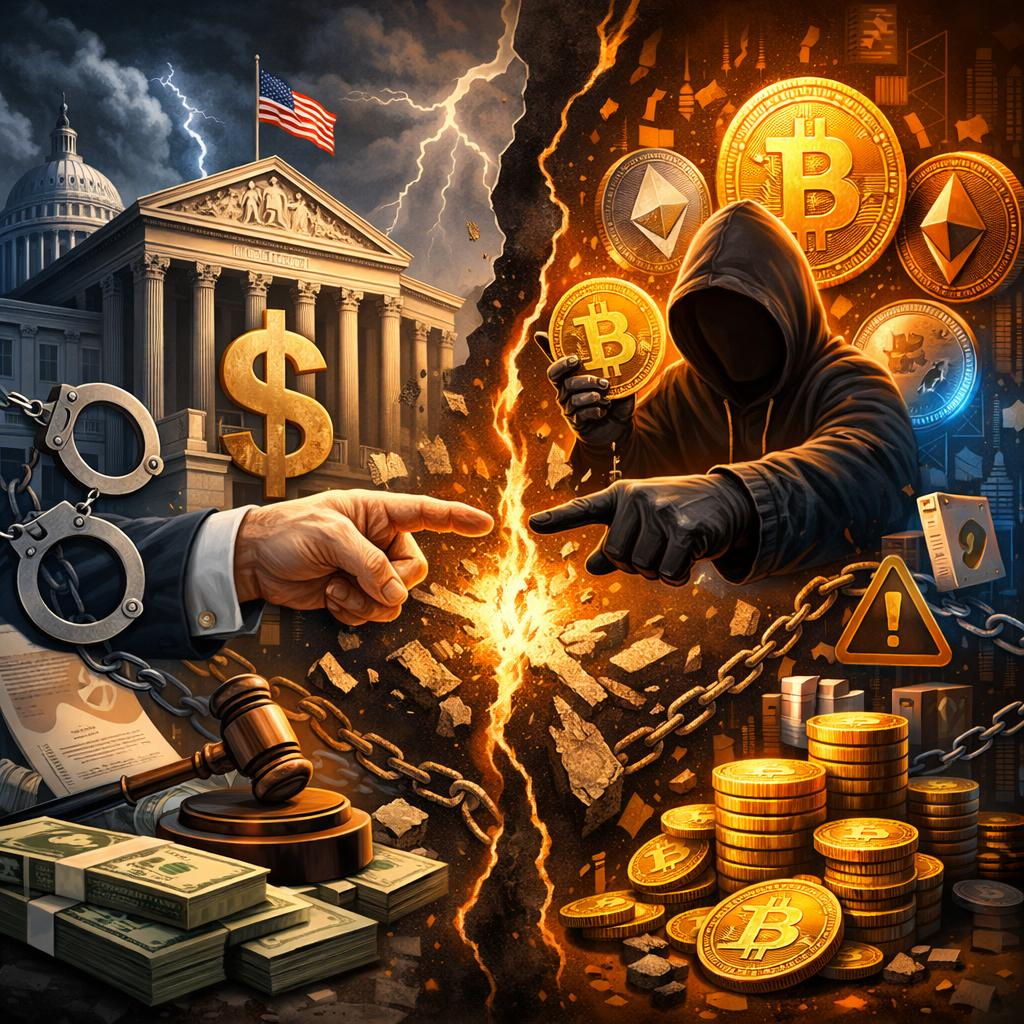
Featured image from OpenArt, chart from TradingView.com

Editorial Process for bitcoinist is centered on delivering thoroughly researched, accurate, and unbiased content. We uphold strict sourcing standards, and each page undergoes diligent review by our team of top technology experts and seasoned editors. This process ensures the integrity, relevance, and value of our content for our readers.