

Elon Musk joins Trump in China for high-stakes meeting with Xi
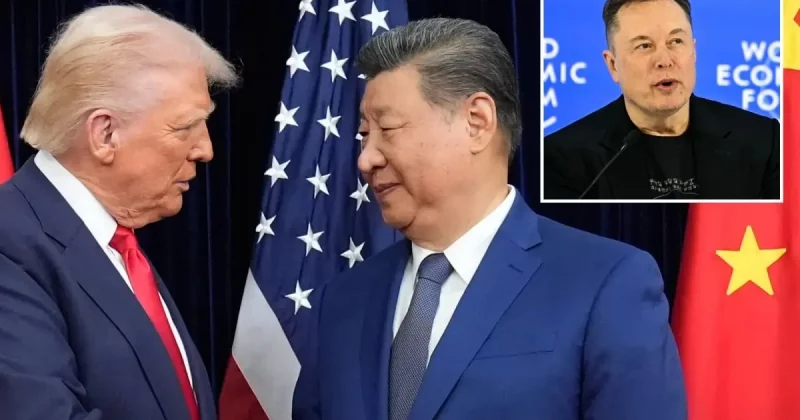
President Donald Trump is bringing what amounts to an economic Avengers squad to Beijing. His meeting with Chinese President Xi Jinping, scheduled for May 14-15, includes a 17-person CEO delegation headlined by Elon Musk, Tim Cook, and BlackRock’s Larry Fink, among others.
The goal: renegotiate the terms of the world’s most consequential trade relationship. The US trade deficit with China hit $375 billion in 2025, and Trump wants that number moving in the other direction.
Wall Street meets the Great Wall
This is Trump’s first state visit to China since returning to office. Five billionaires in the delegation carry a combined net worth of roughly $870 billion.
The strategy mirrors Trump’s 2017 approach during his first term, when he brought business leaders to Beijing to signal American economic dominance. The difference this time is context: the prior trade war involved $350 billion in tariffs on Chinese goods and left both economies bruised.
The tone heading into this summit appears to lean collaborative rather than combative. Discussions are expected to cover Chinese purchases of US agricultural products, potential technology collaborations, and the broader framework for reducing trade friction.
The crypto angle hiding in plain sight
Look at the guest list and a pattern emerges. Roughly 40% of the CEO delegation has meaningful ties to the cryptocurrency sector.
Musk’s influence over Dogecoin is well-documented. Larry Fink’s BlackRock has become a major player in Bitcoin ETFs, helping institutional money flow into digital assets at unprecedented scale.
China banned domestic cryptocurrency trading in 2021, effectively pushing its massive retail trading population underground or offshore.
Bitcoin’s price climbed 2% on May 11 as summit speculation gained traction.
What this means for investors
The bullish case is straightforward. Successful negotiations stabilize global markets, reduce tariff uncertainty, and create breathing room for risk assets including crypto. If the summit produces concrete agreements on technology collaboration, the downstream effects could benefit blockchain innovation, particularly in areas like supply chain verification and cross-border payments where both nations have strategic interests.
The bearish case is equally clear. Escalated tariffs on rare earth materials, which China dominates, could hammer tech supply chains. New restrictions on technology transfers could freeze collaboration rather than expand it.
For Bitcoin specifically, reduced US-China tension tends to weaken the dollar as safe-haven demand eases. A weaker dollar has historically correlated with stronger Bitcoin performance, since the asset is increasingly treated as a hedge against fiat currency depreciation.
BlackRock’s Fink being physically present at a trade summit with Xi sends a message about the seriousness of cross-border capital flows. If new investment channels open between the US and China, even partially, the infrastructure that Bitcoin ETFs and tokenized assets provide becomes more relevant.