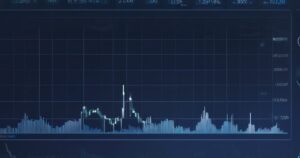

IBM Stock Price Prediction: Software momentum improves, but the tape is still repairing

What happened and why it matters
IBM shares were last quoted at $230.18, down 0.74%, with a 24-hour range of $233.17 to $228.48 and futures volume of $2.0 million. The stock is still digesting a recent earnings reaction and sits below its short- and medium-term moving averages, which tells you the market has not fully embraced the latest operational improvement yet.
That improvement is real, though. IBM reported third-quarter 2026 results on October 21, saying revenue growth accelerated and full-year free cash flow guidance was raised. Reuters-style summary coverage from GMT EIGHT on November 19 said IBM’s third-quarter revenue rose 4.7% to $17.1 billion, ahead of the $16.82 billion consensus estimate, while adjusted EPS came in at $2.95 versus $2.86 expected. The same report said CFO James Kavanaugh described delayed software deals as beginning to close and lifted the annual software revenue growth outlook to about 7% to 8%, from 6% to 8%.
Analyst targets are still supportive
There is no shortage of higher targets around the name. StockAnalysis, citing 25 analysts polled by S&P Global, shows a consensus Buy rating and an average price target of $259.85, with a low of $174 and a high of $300. Separately, Evercore ISI reiterated an Outperform rating and a $275 target on November 6, while Susquehanna also set a $275 target the same day. JPMorgan raised its target from $250 to $269 on November 19. That cluster matters because it suggests the sell-side is still leaning on IBM’s execution story, but the market has not priced in the full benefit yet.
Technicals still argue for caution near-term
The tape is softer than the headline target stack. IBM is below its 7-day SMA at $239.46, 20-day SMA at $245.83, 50-day SMA at $239.92, 12-day EMA at $240.40, and 26-day EMA at $242.85. That is a clear short-term downtrend setup, not a clean breakout base.
Momentum is also weak. RSI is 33.17, which is not oversold enough to force a reversal but does indicate a stretched selloff. MACD is negative at -2.4569, with the histogram flat at 0.0000, so downside momentum has slowed but has not reversed. Stochastic readings are very depressed, with %K at 7.96 and %D at 6.37, which usually fits a market close to support but not necessarily ready to turn immediately.
The most important levels are straightforward: immediate support sits at $228.05, with stronger support at $225.92. Immediate resistance is $232.74, then stronger resistance at $235.30. IBM is trading just above the lower Bollinger Band at $230.69, so the shares are pressing against the lower edge of their recent range rather than reclaiming the mid-band at $245.83.
Positioning is mixed, not decisive
Binance perpetual futures data is not giving a clean directional signal. Funding is flat at 0.0000%, open interest is 13,167.71 contracts, and open interest value is $3.13 million, up 2.77% over 24 hours. That means positioning has been added without a strong cost to being long or short.
The ratio data is split. Binance global accounts show 47.9% long and 52.1% short, while top-trader accounts are 57.1% long and 42.9% short. Taker flow is heavier on the sell side, with a buy/sell ratio of 0.7020. Read together, that says aggressive selling has dominated the most recent tape, even though some larger traders are leaning the other way.
The setup from here
IBM has two competing stories right now: improving operating momentum in software and infrastructure, and a still-fragile market structure that has not yet reclaimed key moving averages. If the stock can hold the $228.05 to $225.92 support band and push back through $232.74, the next test is whether buyers can force a move back toward the $239 to $246 area where the moving averages cluster. If support gives way, the recent pullback has room to extend before the market finds a cleaner technical reset.
IBM Forecast & Signals →
The next swing will likely depend on whether the market believes the third-quarter software improvement is a one-quarter repair job or the start of a more durable earnings inflection.