
Netflix’s Co-CEO Doesn’t Read Business Books. He Rereads One 1902 Novel About a Ship Instead
Key Takeaways
Netflix co-CEO Ted Sarandos skips management books but keeps returning to Joseph Conrad’s 1902 Typhoon.At 61, Sarandos sees Conrad’s storm-battered captain as a lesson in navigating decisions that go sideways.Netflix’s 2026 Warner Bros. battle put Sarandos’ philosophy of managing through uncertainty to the test.
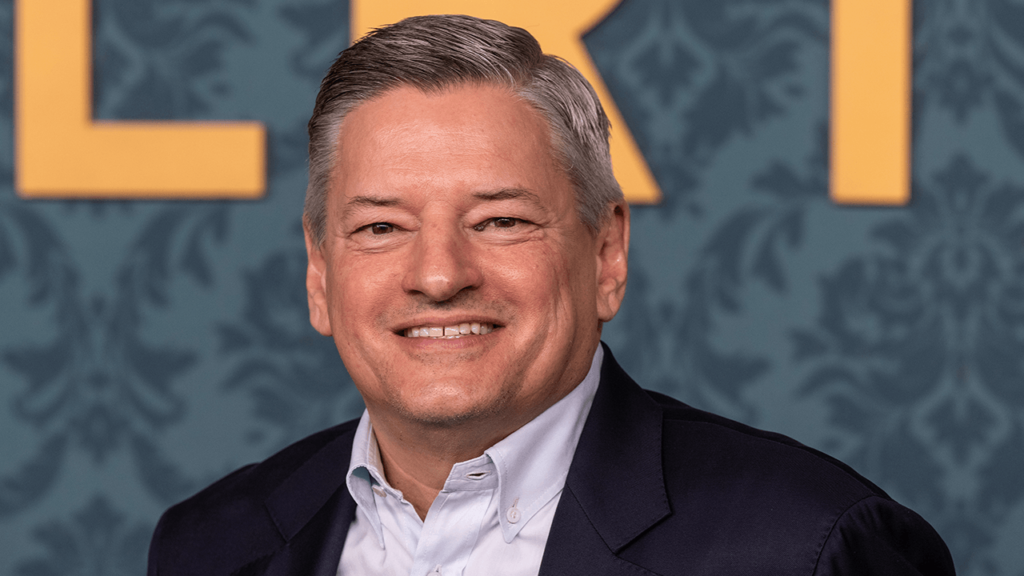
Ted Sarandos keeps his desk, nightstand, and work bag free of management books, and says he doesn’t really read them at all. The Netflix co-CEO has one repeat pick instead: Joseph Conrad’s 1902 novella Typhoon, about a steamship crew fighting through a brutal storm under Captain Tom MacWhirr. “I read it over and over again because I find … I get something different in the book every time I read it,” Sarandos said on CNBC’s Leaders Playbook, which premiered on 01/07/2026. The reread habit landed in public view as Netflix was in the middle of a high-stakes fight to acquire Warner Bros., a moment that made Sarandos’ fascination with a so-called reckless captain feel less literary and more like an operating philosophy.
A co-CEO skips the leadership shelf
In tech, executives love to compare notes on frameworks and management bibles. But earlier this year, Netflix co-CEO Ted Sarandos offered a different kind of north star. In a CNBC “Leaders Playbook” interview that premiered on January 7, 2026, he said he doesn’t keep management books on his desk, nightstand, or in his work bag, and doesn’t really read them at all.
Instead, Sarandos pointed to fiction, and one title in particular: “Typhoon”, Joseph Conrad’s 1902 novella about a steamship captain and crew pushing through a brutal storm. “I read it over and over again because I find … I get something different in the book every time I read it,” he said.
Why “Typhoon” still works as a business mirror
On the surface, Conrad’s story is not an office parable, which is exactly the appeal. Sarandos put it plainly: “It doesn’t sound like a management story on the surface, but I think it’s the most powerful leadership story I’ve ever read.” The book tracks Captain Tom MacWhirr on the steamer Nan-Shan, portrayed as an empirical man without imagination, which makes every decision feel uncomfortably literal.
There’s also a useful detail for anyone who has sat through enough slide decks: “Typhoon” was serialized from January to March 1902, and first published as a book in New York by Putnam in 1902. It is old enough to feel like pure literature, yet specific enough to read like a case study in pressure.
How his reading changed, and what that says about leadership
Sarandos said he first read the novella roughly 2 decades before that January 2026 interview. Back then, he saw MacWhirr as a reckless “hot dog,” endangering his crew in pursuit of his own judgment. With time, that reading softened into something closer to endurance than bravado.
Now 61, Sarandos framed the lesson as the aftermath of imperfect calls: “Now, what I see is that when you go through life and you go through business, you make a lot of decisions that don’t turn out the way you thought they would.” Then he narrowed it to the real test: “How do you manage through that?”
The novella sits behind bigger, messier stakes
That mindset matters because Sarandos is not leading a small, steady business. He joined Netflix in 2000 as head of content, and the company’s strategy now collides with platform competition, shifting distribution, and headline-grabbing corporate deal talk.
At the time, Netflix was also navigating a high-stakes effort involving Warner Bros., a situation that trade coverage described as a battle shaped by uncertainty and negotiation, including moments when Netflix was willing to walk away. Other accounts followed Sarandos as he fought to seal the deal, and later explained why he quit that push. In that context, a storm at sea reads less like fiction and more like rehearsal.