
Saylor at $1M, Hayes at $125K, Brandt at $60K Low

Key Takeaways
Arthur Hayes targets $125K bitcoin by December 2026, citing returning liquidity and Fed policy shifts.Bernstein analysts set a $150K–$200K end-2026 target, pointing to exchange-traded fund (ETF) flows and institutional adoption.Peter Brandt warns of a potential $40K–$60K bottom by fall 2026 before a cycle peak near $500K in 2029. Others echo this bearish view.
Market Observers Call Bitcoin Targets From $40K to $1.5M
At Bitcoin Vegas 2026, Arthur Hayes, co-founder of BitMEX and chief investment officer at Maelstrom, said he sees bitcoin ( BTC) reaching $125,000 by December 2026. Hayes tied his outlook to returning global liquidity, potential Federal Reserve policy shifts, and artificial intelligence (AI)-driven capital dynamics. He described a retest of bitcoin’s prior all-time high just above $126,000 as likely, and remarked that a breakout past $90,000 could happen quickly once conditions align.
Michael Saylor, executive chairman of Strategy, took a longer view. Speaking on CNBC on May 21, Saylor projected bitcoin would appreciate roughly 30% annually over the next 20 years, with near-term appreciation expected before year-end 2026. He has repeatedly pointed to $1 million per coin by the end of the decade, and in more extreme long-term scenarios, has referenced $10 million as bitcoin’s true potential value as a global digital collateral asset. Saylor views current price levels as a meaningful discount and has continued buying.
Not everyone is forecasting a straight line up. Peter Brandt, a veteran trader and chartist, pushed back publicly on the most aggressive 2026 price calls. In an April 27 social media post, Brandt wrote that those predicting $250,000 in 2026 needed to reconsider. His own cycle analysis points to an investable low forming in September or October 2026, potentially in the $40,000 to $60,000 range, followed by a major cycle peak between $250,000 and $500,000 by late 2029, contingent on four-year halving patterns holding.
Institutional research desks have clustered around a more moderate near-term range. Dlnews.com reports that Bernstein analysts put bitcoin’s end-2026 target at $150,000 to $200,000, attributing the move to sustained ETF inflows and growing institutional participation. Traders Union details that Standard Chartered’s Geoffrey Kendrick set a similar 2026 range of $150,000 to $250,000, with longer-term targets reaching $400,000 to $500,000 by 2029 and 2030.
Ark Invest CEO Cathie Wood offered the widest range among major institutional voices. Ark’s Big Ideas 2026 report, covered in May, laid out a bear case of $300,000, a base case of $710,000, and a bull case of $1.5 million by 2030. Wood described current price levels as a buying opportunity and cited institutional momentum as a key catalyst.
Venture capitalist Tim Draper set his target at $250,000 within approximately 18 months, pointing to dollar inflation and broader bitcoin adoption. Draper also stressed that companies that choose not to hold bitcoin on their balance sheets are acting irresponsibly.
Adam Back, CEO of Blockstream, placed bitcoin at $500,000 to $1 million by the end of the current halving cycle around 2028. Back stated at Paris Blockchain Week that the timeline was closer than most people assumed, based on adoption rates and the fixed supply schedule.
Vaneck’s head of digital assets research, Matthew Sigel, recently set a $1 million price target within the current U.S. presidential term. At Consensus in Miami, Fundstrat’s Tom Lee offered a range of $200,000 to $400,000 or higher for the 2026 to 2027 cycle peak, consistent with his pattern of above-consensus calls.
On the bearish end of the trader spectrum, Doctor Profit and Crypto Rover, both widely followed analysts on X, flagged a potential bottom in the low $40,000 to $50,000 range by fall 2026.
Mike Novogratz, CEO of Galaxy Digital, took a more measured tone in recent commentary. His May remarks on the “All Things Markets” episode with Anthony Scaramucci focused on inflation and macroeconomic headwinds, and he noted a shift away from high-speculation retail activity toward real-world asset adoption.
PlanB, the analyst behind the stock-to-flow model, remarked on X that current cycle discussions still point to bitcoin reaching $200,000 or higher in bullish 2026 scenarios, with some model adjustments made to reflect the ongoing consolidation phase.
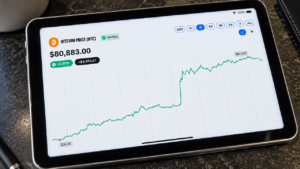
Bitcoin was trading in the $75,000 to $82,000 range through much of late April and May, following consolidation after its prior all-time high. Today, it’s range-bound around the $77,000 zone. Whether the next major move clears $125,000 or first revisits $50,000 depends largely on which prediction’s framework proves out over the months ahead.