
Solana’s Alpenglow Launches on Mainnet, Targets 99% Faster Finality

Solana’s first major consensus upgrade, Alpenglow, went live on mainnet around 1:54 pm UTC on Wednesday, according to the Solana Foundation’s Alpenglow dashboard.
Alpenglow seeks to reduce transaction finality by 99%, to roughly 150 milliseconds from about 12.8 seconds, according to the Solana Foundation’s July announcement.
The upgrade’s first phase, Votor, replaces the existing voting and finalization mechanism with direct validator voting and a certificate-based system designed to cut transaction finality to roughly 150 milliseconds. A later phase will introduce Rotor, a new block data-distribution protocol intended to replace Turbine.
Alpenglow is Solana’s first major consensus upgrade, replacing its current consensus model, TowerBFT. The upgrade’s 150-millisecond finality target seeks to introduce near-immediate transaction finality for users, which could mean faster payments, trade settlements and more responsive applications.
Cointelegraph has approached the Solana Foundation for comment on Alpenglow’s finality measurements in testnet environments and its expected performance in real-world applications.
Solana Alpenglow activation dashboard. Source: Solana.com
At press time, the Solana mainnet showed a 6.6-second transaction finality and a throughput of 4,721 transactions per second, according to the Alpenglow dashboard.
Related: Solana Foundation targets settlement in seconds with DvP launch
Alpenglow marks “biggest change” for Solana’s core protocol: Anza
Alpenglow will introduce the “biggest change to Solana’s core protocol” since genesis, Anza researchers wrote in a May blog post.
A 150-millisecond latency, “Solana can compete with Web2 infrastructure in terms of responsiveness, potentially making blockchain technology viable for entirely new categories of applications,” wrote Anza researchers Quentin Kniep, Kobi Sliwinski and Roger Wattenhofer on May 19.
In August, Solana reduced its slot time for the first time since genesis, as part of the Solana Foundation’s plans to halve slot times to 200ms, arguing that it would improve latency and accelerate confirmations on the blockchain network. It completed the fourth stage of the slot reduction plan in October.
Following Alpenglow, Solana validators are expected to continue working on Agave 4.5, an upgrade that proposes increasing the number of accounts supported by a versioned transaction from 64 to 96. The increase could create better swap routes and execution prices, according to the Solana Foundation. The upgrade is currently in development and planned for December 2026.
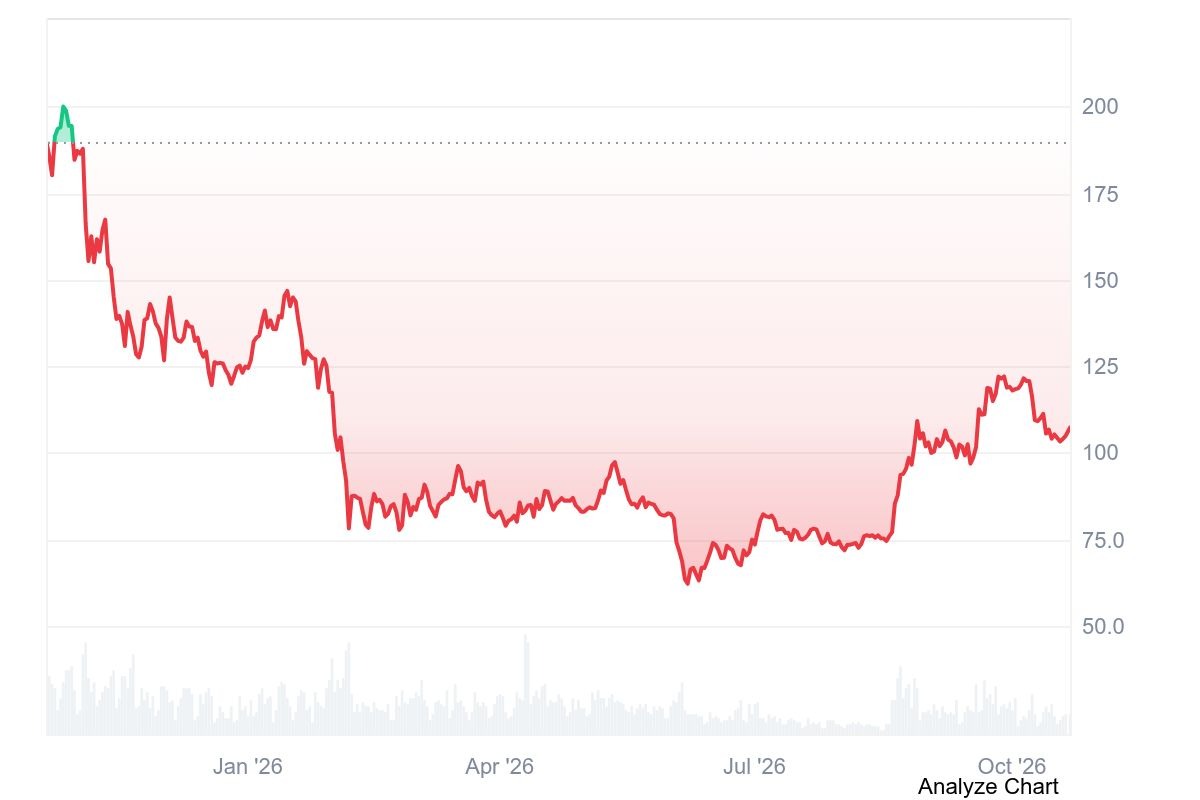
SOL/USD, 1-year chart. Source: CoinMarketCap
The Solana (SOL) token’s price rose nearly 3% in the 24 hours leading up to the upgrade, reversing part of its 42% decline seen during the past year, according to CoinMarketCap.
Magazine: Solana’s fee overhaul increases burn and makes resource hogs pay