
The Stablecoin Wars Just Got A New Contender — And This One Has 500,000 Retail Locations
MoneyGram, one of the world’s largest cross-border payments networks, announced on June 2 the launch of MGUSD — a native US dollar stablecoin bearing the company’s own brand and designed to serve as the foundational layer for a growing suite of financial services across its global remittance network, per the company’s official press release.
The move marks a decisive shift in MoneyGram’s stablecoin strategy. Until now the Dallas-based company had built its digital dollar services on third-party infrastructure — primarily Circle’s USDC, deployed through its Stellar Development Foundation partnership to power stablecoin balance features in its consumer app across Colombia and El Salvador. MGUSD changes that equation entirely.
A branded native stablecoin hands MoneyGram direct control over issuance, reserve management, and the yield economics that previously flowed to external issuers.
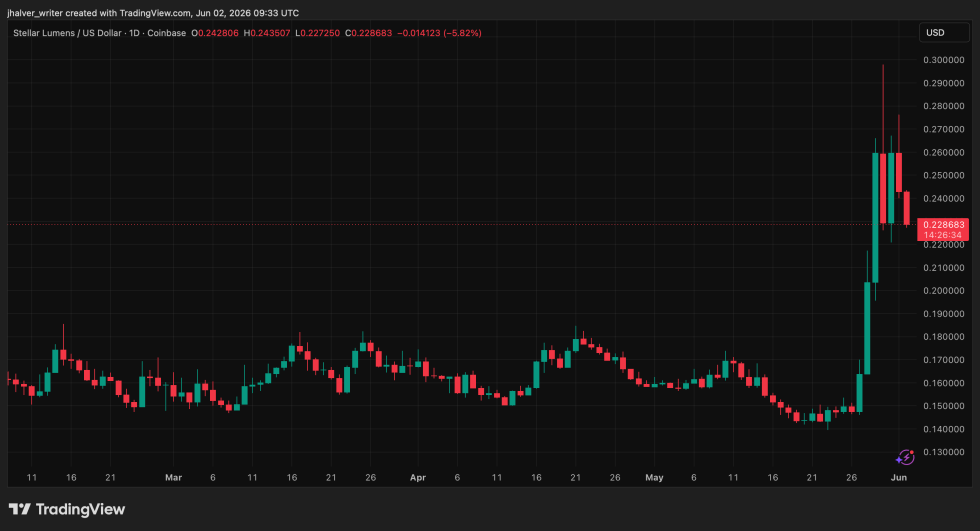
XLM’s price trends to the upside on the daily chart. Source: XLMUSD Tradingview
Why This Stablecoin Matters For The Remittance Industry
MoneyGram is not a crypto-native company building a stablecoin for crypto-native users. It is a 85-year-old payments institution operating across more than 200 countries with approximately 500,000 retail locations and over 50 million customers annually — and it just issued its own digital dollar. The distinction is significant. When a company of this scale and regulatory standing launches a native stablecoin, it normalizes the instrument for the exact demographic — remittance-dependent families in Latin America, Africa, and Southeast Asia — that has historically been furthest from crypto adoption.
The timing is deliberate. The GENIUS Act, signed into law earlier in 2026, established the first formal US regulatory framework for stablecoin issuers — a development MoneyGram CEO Anthony Soohoo had publicly described as the guardrails the company needed to scale its digital dollar services confidently. MGUSD is the first major consumer-facing stablecoin launch to arrive squarely within that new regulatory window.
MoneyGram’s infrastructure buildout has been deliberate and sequential — Stellar partnership in 2021, Fireblocks treasury integration in December 2025, Tempo blockchain validator status in May 2026, and now a proprietary stablecoin. Each step has reduced its dependence on external partners and deepened its control over the digital payment stack.
This development marks a pivotal moment for the nascent sector’s convergence with mainstream global finance. A remittance giant issuing its own stablecoin — backed by decades of compliance infrastructure and half a million cash locations worldwide — is the clearest signal yet that the stablecoin economy is no longer a crypto industry story. It is a global payments industry story.
Cover image from Grok, XLM chart from Tradingview

Editorial Process for bitcoinist is centered on delivering thoroughly researched, accurate, and unbiased content. We uphold strict sourcing standards, and each page undergoes diligent review by our team of top technology experts and seasoned editors. This process ensures the integrity, relevance, and value of our content for our readers.