

Trump Administration Inches Closer to Opening 401(k)s to Crypto
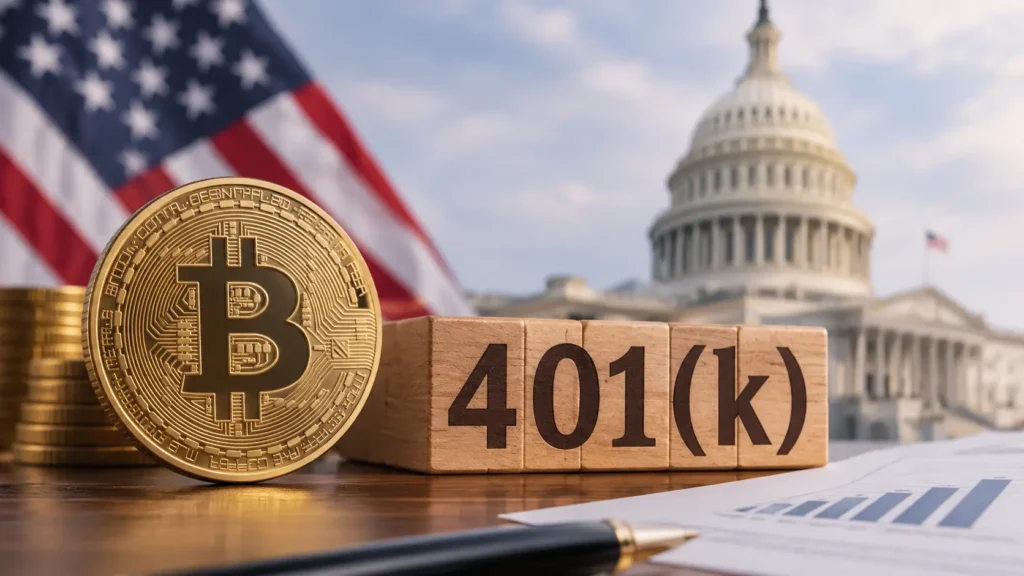
The Trump administration has moved another step closer to opening America’s $10 trillion-plus retirement market to cryptocurrency. The US Department of Labor (DOL) has submitted a proposed regulatory framework to the White House for review, potentially bringing Bitcoin and other alternative investments closer to becoming options within employer-sponsored 401(k) retirement plans.
The filing, submitted on November 5, marks a significant development in President Donald Trump’s effort to expand access to digital assets through traditional investment accounts. However, the proposal still needs to clear the White House review process, and its arrival does not mean Americans can immediately add crypto to their retirement portfolios.
Labor Department Sends Crypto Retirement Rule to White House
The Department of Labor submitted its proposal to the Office of Information and Regulatory Affairs (OIRA), which operates under the White House Office of Management and Budget. OIRA reviews federal regulations before they are finalized and published.
The filing follows Trump’s August 2025 executive order directing federal agencies to make it easier for retirement plans to consider alternative investments, including cryptocurrencies, private equity and real estate.
Crypto in your 401(k) is getting closer to reality. The Department of Labor has sent a proposed rule to the White House for review that would pave the way for retirement plans to include alternative assets, including crypto and private equity. The move follows Trump’s executive order to expand investment options for retirement savers.
The administration’s latest move builds on an earlier regulatory proposal released in March 2026. That framework outlined how retirement plan managers could assess alternative assets when deciding whether to include them among their investment options. – Frank Chaparro on X.
In its latest filing, the Labor Department emphasized the need for fiduciaries to balance potentially higher investment expenses against the possibility of stronger long-term returns and broader portfolio diversification. The agency also indicated that it was still evaluating the costs associated with the proposed framework, suggesting that some regulatory considerations remain unresolved.
Six Key Factors Would Guide Crypto Investment Decisions
The proposed framework does not instruct employers to add Bitcoin or other cryptocurrencies to their retirement plans. Instead, it establishes a process that fiduciaries could follow when evaluating alternative investments.
The March proposal identified six areas for consideration: performance, fees, liquidity, valuation, performance benchmarks and investment complexity. These factors are particularly important for digital assets because cryptocurrency markets can experience sharp price movements, while certain investment products may carry higher management fees or involve complicated structures.

The proposal also addresses how managers should evaluate assets that do not have readily available market prices. This is especially relevant to private equity and other investments that are not traded as frequently as publicly listed stocks.
$216 Billion Crypto Allocation Scenario Highlights Market Potential
The potential impact extends well beyond the regulatory changes themselves. American retirement accounts represent an enormous pool of capital that could eventually provide additional exposure to digital assets.
According to the Investment Company Institute, US 401(k) plans held approximately $10.8 trillion in assets at the end of June 2026. Crypto-focused company Sweep highlighted the scale of that market in a November 6 post on X, suggesting that a 2% allocation of those assets to cryptocurrency could translate into approximately $216 billion in potential inflows.
Even a relatively small allocation could create substantial demand for digital assets if employers and retirement plan managers decide to offer suitable crypto investment products. However, the calculation assumes that 2% of the entire retirement asset pool moves into cryptocurrency. There is currently no indication that employers, fiduciaries or individual savers will adopt such an allocation.
Political Opposition Raises Concerns Over Retirement Risk
Despite the administration’s efforts, the proposal has attracted criticism from lawmakers concerned about exposing retirement savings to volatile and potentially complex investments.
Senators Bernie Sanders and Elizabeth Warren have previously urged the Labor Department to abandon the initiative, arguing that including assets such as cryptocurrency in retirement plans could expose ordinary investors to unnecessary financial risks.
Their concerns center on crypto’s price volatility, investment complexity and the possibility that inexperienced savers could struggle to assess the risks associated with digital assets.
The regulatory debate also reflects a broader shift in the Labor Department’s approach. During the Biden administration, the department issued guidance warning retirement plan managers to exercise extreme care before considering cryptocurrency investments. The Trump administration later withdrew that guidance, returning to a more neutral position on crypto exposure in retirement accounts.
What Happens Next for Crypto in 401(k) Plans?
The White House review must be completed before the Labor Department can move toward publication of the final rule. Even then, the framework would not automatically make Bitcoin or other cryptocurrencies available in every workplace retirement account.
For the cryptocurrency industry, the development represents a potential gateway into one of the largest pools of long-term investment capital in the United States. Yet the ultimate impact will depend on how many retirement providers are comfortable offering digital asset exposure and how much risk investors are willing to accept.
If the framework moves forward, crypto could gain a more established place in traditional retirement investing. For now, however, the market is waiting for the White House to complete its review and reveal the final regulatory approach.
Could access to 401(k) retirement accounts become one of the biggest catalysts for Bitcoin adoption in the US?
Will American retirement savers embrace crypto investments, or will concerns over volatility keep employers cautious?

Editorial Process for bitcoinist is centered on delivering thoroughly researched, accurate, and unbiased content. We uphold strict sourcing standards, and each page undergoes diligent review by our team of top technology experts and seasoned editors. This process ensures the integrity, relevance, and value of our content for our readers.