Trump to discuss US arms sales to Taiwan with Xi Jinping this week, raising crypto supply chain concerns
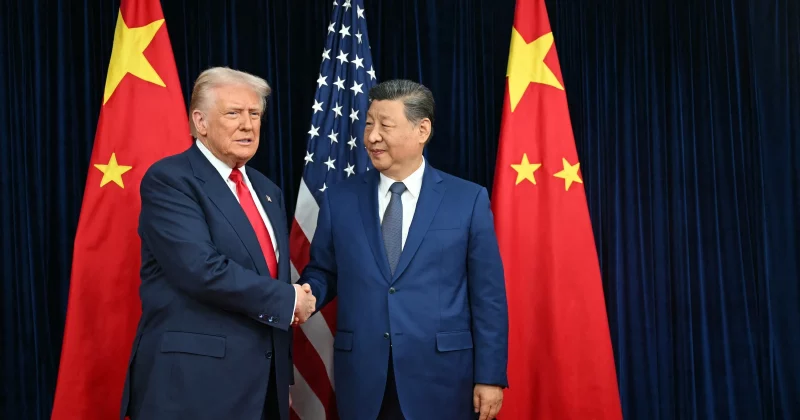
President Donald Trump is set to raise the thorny issue of US arms sales to Taiwan during a meeting with Chinese President Xi Jinping this week. Taiwan is home to TSMC, the semiconductor giant responsible for producing over 90% of the world’s advanced chips. Those chips are the backbone of Bitcoin mining hardware. Any escalation in cross-strait tensions doesn’t just rattle traditional markets. It threatens the physical supply chain that keeps proof-of-work blockchains humming.
The $14 billion question
The meeting arrives at a moment when a bipartisan group of US senators is pushing for approval of a $14 billion weapons package for Taiwan. US arms sales to Taiwan have exceeded $20 billion since 2017, making this a well-worn source of friction between Washington and Beijing.
China claims Taiwan as its own territory. Every weapons deal is treated in Beijing as a direct challenge to that claim. The proposed package would be one of the largest single tranches of military aid to the island, and it’s being debated at the exact moment Trump and Xi sit down.
These discussions sit alongside a broader agenda that includes trade policy and AI development, two areas where the US and China are already locked in competitive escalation.
Why crypto cares about a semiconductor island
Bitcoin mining is a hardware-intensive business. The application-specific integrated circuits, or ASICs, that power mining operations rely on cutting-edge chip fabrication. TSMC is, for all practical purposes, the only company on the planet that can produce these chips at the required scale and sophistication. If something disrupts TSMC’s operations, whether through military conflict, trade sanctions, or supply chain blockades, the pipeline of new mining equipment dries up.
Bitcoin’s market saw a 5% dip in March 2026 following a round of Chinese threats related to Taiwan.
Taiwan’s own crypto pivot
A Taiwanese lawmaker proposed on May 2, 2026, to establish Bitcoin reserves as a hedge against the economic isolation that could accompany a Chinese military threat. If traditional financial channels get disrupted during a conflict, Bitcoin offers an alternative store of value that doesn’t depend on the SWIFT network or the goodwill of any particular central bank.
What this means for investors
The near-term risk is straightforward. If Trump-Xi talks go poorly, or if the $14 billion arms package advances without any diplomatic counterweight, expect a fear-driven selloff in risk assets. The March 2026 dip demonstrated that markets are already conditioned to react to Taiwan-related escalation.
Companies like Bitmain and MicroBT, which depend on TSMC for fabrication, would face margin pressure or delivery delays if supply is constrained. Intel and Samsung are building competing fabrication capacity, but neither is expected to match TSMC’s capabilities for years.
Market participants should be watching not just the diplomatic headlines but the secondary signals: semiconductor export controls, shipping lane activity in the Taiwan Strait, and any changes to TSMC’s customer allocation priorities.