

NVIDIA’s 800 VDC Power Push Targets Next-Gen AI Compute
Jessie A Ellis
Aug 11, 2026 15:31
NVIDIA unveils 800 VDC power architecture to scale AI factory performance, reduce costs, and improve energy efficiency.
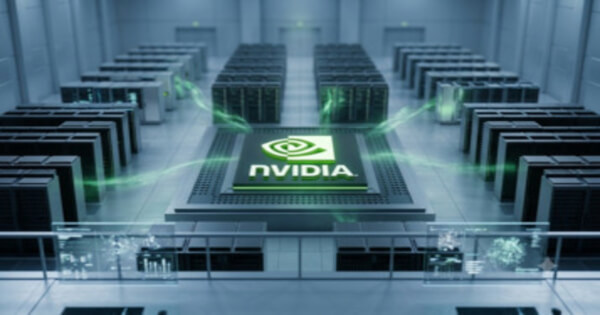
NVIDIA is doubling down on its infrastructure ambitions with the rollout of its 800 VDC power architecture, designed to address the growing energy and performance demands of AI factories. Developed in collaboration with Google, Microsoft, and more than 80 industry partners through the Open Compute Project (OCP), this system aims to replace traditional AC-based power distribution with a high-voltage direct current (DC) approach, promising greater efficiency and scalability for next-generation AI workloads.
Why does this matter? AI factories are on track to become some of the most power-hungry facilities in the world. Current AC infrastructure introduces inefficiencies due to multiple conversion stages, particularly as AI demands push compute densities toward megawatt levels per rack. Traditional methods, like 54 VDC rack power, are hitting physical and economic limits, making a shift to higher-voltage systems critical.
800 VDC: Efficiency and Scalability
The 800 VDC architecture simplifies power delivery by converting grid electricity to high-voltage DC at the facility level and distributing it directly to compute racks. This approach cuts out multiple conversion steps, reducing energy losses and complexity. NVIDIA claims up to a 5% increase in end-to-end efficiency and potentially 30% lower total cost of ownership.
For existing data centers, NVIDIA’s hybrid-compatible 800 VDC power racks—which debut in late 2026—will offer an easy upgrade path. These racks integrate into traditional AC setups without requiring major infrastructure changes, allowing operators to scale AI performance without abandoning prior investments in land, power rights, or building systems.
Collaborative Ecosystem Development
Ensuring widespread adoption, NVIDIA, Google, and Microsoft have standardized the 800 VDC architecture through OCP, publishing detailed specifications in March and July 2026. Over 80 manufacturers, including heavyweights like Eaton, Schneider Electric, and ABB, are building hardware to align with these standards, creating a robust supply chain for the architecture.
The roadmap extends beyond hybrid racks. By 2027, NVIDIA plans to introduce row-level power centers supporting up to 2 megawatts per row and facility-scale DC power blocks for operators designing fully native 800 VDC environments. These innovations cater to both immediate and long-term scaling needs of AI facilities.
The Stakes: AI’s $9 Trillion Future
The timing of this rollout is significant. Analysts at Wood Mackenzie project $9 trillion in global AI and data infrastructure investment by 2040. Facilities capable of efficiently scaling their compute power will be best positioned to absorb this capital. With NVIDIA, Google, and Microsoft anchoring the ecosystem, the 800 VDC approach could become a central pillar of next-gen AI infrastructure.
However, challenges remain. High-voltage DC systems require new safety protocols, workforce training, and compatible protection devices. The industry will need to navigate these hurdles to fully unlock the potential of the architecture.
Market Implications
For NVIDIA, this signals a broader play beyond GPUs into AI infrastructure. While the company’s stock (currently trading at $219.26, up 0.79% today) reflects strong investor confidence in its AI leadership, the 800 VDC initiative could further entrench NVIDIA in the data-center market. Competitors like AMD and Intel might face added pressure to respond with similar innovations.
For traders, watch for updates on ecosystem adoption and deployment timelines, particularly the end-of-2026 launch of hybrid racks and the 2027 release of row and facility-level systems. These milestones could drive market sentiment and signal NVIDIA’s ability to capitalize on the accelerating AI infrastructure boom.
Image source: Shutterstock