
Senate Republicans Release ‘Final’ Clarity Act Draft as Trump Accepts Most Ethics Provisions
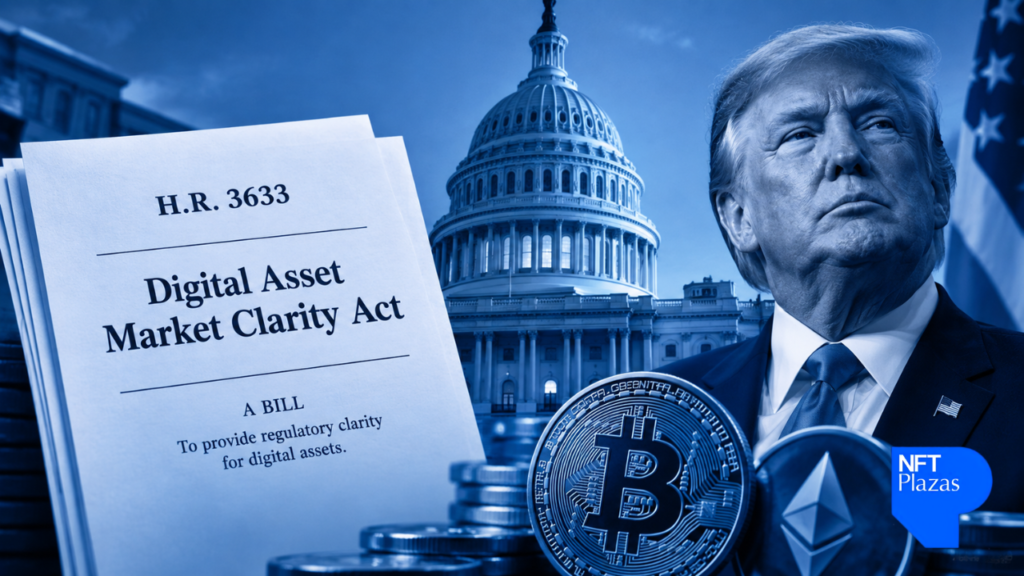
Senate Republicans have released what they are calling the “final” draft of the CLARITY Act, making a renewed push to advance the long-awaited cryptocurrency market structure bill before Congress enters the final stretch of the 2026 legislative calendar.
Sens. Cynthia Lummis, John Boozman and Tim Scott released the 635-page proposal late Sunday, ahead of a key procedural vote scheduled for Tuesday, Sept. 15. Republicans said the latest version includes 126 substantive changes requested by Senate Democrats following more than a year of bipartisan negotiations.
The revised legislation also incorporates most of a bipartisan ethics proposal from Sens. Thom Tillis and Ruben Gallego, while President Donald Trump has agreed to the new restrictions. The development could remove one of the most significant political obstacles facing the CLARITY Act.
“If cloture is invoked, the new text would be offered as the substitute amendment,” the senators said.

Trump agrees to new crypto ethics restrictions
The ethics provisions have become a major point of contention as lawmakers negotiate the bill.
Trump and his family have faced scrutiny over their involvement in cryptocurrency businesses, including World Liberty Financial, the USD1 stablecoin and the TRUMP memecoin. Trump’s financial disclosure reportedly showed more than $1.4 billion in crypto-related income in 2025, raising questions about potential conflicts of interest as his administration works on cryptocurrency regulation.
The revised bill would apply ethics restrictions to federal public officials and employees, including the president, vice president, members of Congress and their spouses.
The proposal largely adopts the Tillis-Gallego framework, including a role for state attorneys general in enforcing conflict-of-interest rules. That provision had been an important condition for some Democrats considering support for the legislation.
Lummis said Trump had voluntarily agreed to the restrictions and argued that Democrats should now support the bill.
“Democrats got what they wanted; now they need to take yes for an answer,” Lummis said.
However, the language does not impose the same restrictions on other family members, including the children of public officials, leaving some potential conflicts outside the scope of the proposal.
Stablecoin rewards face a new circuit breaker
The latest Clarity Act draft also addresses one of the biggest disputes between the cryptocurrency industry and traditional banks: stablecoin rewards.
The legislation generally prevents platforms from paying interest on idle payment stablecoins, but rewards tied to stablecoin use remain permitted. Banking groups have argued that such incentives could encourage customers to move deposits away from community banks and into stablecoin-based products.
To address that concern, the new draft would give the Treasury secretary authority to impose an 18-month circuit breaker on certain stablecoin rewards if payment stablecoins trigger substantial deposit outflows.
The provision is designed as an emergency safeguard rather than a permanent ban on rewards.
The American Bankers Association has pushed lawmakers to close what it describes as a stablecoin interest loophole, arguing that community bank deposits are essential to local lending.
The addition could help win support from lawmakers concerned about the potential impact of stablecoins on the traditional banking system.
Blockchain developer protections narrowed
The bill also makes changes to protections for blockchain developers under the Blockchain Regulatory Certainty Act.
The revised language would narrow those protections to matters involving the Bank Secrecy Act and civil enforcement. Republicans removed broader language that could have protected developers from certain criminal charges, including prosecutions under 18 U.S.C. 1960.
That statute has been used by U.S. prosecutors in cases involving developers associated with privacy-focused cryptocurrency services, including Tornado Cash and Samourai Wallet.
The changes reflect an effort to provide greater regulatory certainty for developers without creating what lawmakers could view as a broad exemption from federal criminal law.
The Agriculture Committee provisions have also been tightened, with additional guardrails targeting affiliate trading, conflicts of interest and vertical integration involving digital commodity exchanges, brokers and dealers.
The legislation further clarifies when state consumer-protection laws can apply to digital asset businesses.
Clarity Act faces a narrow path to passage
Despite the latest compromise, the bill still faces a difficult path through Congress.
The Senate is scheduled to hold a cloture vote on Tuesday, Sept. 15, on the motion to proceed. The vote requires 60 senators.
Republicans control 53 Senate seats, meaning at least seven Democrats or independents must join them if every Republican supports the measure.
A successful cloture vote would not immediately send the bill to the House. It would begin the debate process, after which senators would need to navigate amendments and another procedural vote before final passage.
The House would then need to consider the Senate version or reconcile it with its own legislation before the measure could reach Trump’s desk.
Time is becoming a major constraint. The Senate’s tentative schedule includes a state work period beginning Oct. 5, while Election Day is set for Nov. 3. House leaders have also canceled scheduled work weeks later in September, leaving lawmakers with only a limited window to complete the legislation.
Lummis has previously warned that if the Clarity Act fails to pass during the current Congress, lawmakers could be forced to wait until 2030 for another opportunity.

Patrick Witt – Executive director of the White House Council of Advisors for Digital Assets’S Status (Source: X)
The latest compromise has nevertheless improved market expectations. Prediction markets put the probability of the bill becoming law this year at roughly one-third, up from the low-20% range before the latest draft was released.
For the cryptocurrency industry, Tuesday’s vote will therefore be more than a procedural hurdle. It will be the clearest test yet of whether months of negotiations over market structure, stablecoins, developer protections and political ethics have produced a compromise capable of winning bipartisan support.
If Republicans can secure the required 60 votes, the CLARITY Act will move into the next stage. If they cannot, the industry could face another prolonged wait for comprehensive federal rules governing the U.S. digital asset market.